Why Sam's Club Paper Products Often Outperform Name Brands
Navigating the aisles of a warehouse club can be overwhelming, especially when trying to determine if buying in bulk actually translates to real-world savings. When it comes to household essentials, Sam's Club paper products are frequently cited by consumer advocates and budget-conscious families as a primary reason to maintain an annual membership. The retailer stocks a wide array of national brands—including Bounty, Dixie, Kleenex, Solo, Scott, and Viva—but the true focal point for value seekers is their private label, Member's Mark.
The debate over warehouse club quality often centers on whether private-label goods can stand up to the rigorous demands of daily household use. In recent years, Sam's Club has aggressively reformulated its Member's Mark line to compete directly with premium national brands. This guide provides a comprehensive, data-driven analysis of Sam's Club paper products, breaking down the exact price-per-unit math, comparing performance metrics against competitors, and offering strategic advice on how to maximize your membership benefits through smart purchasing habits.
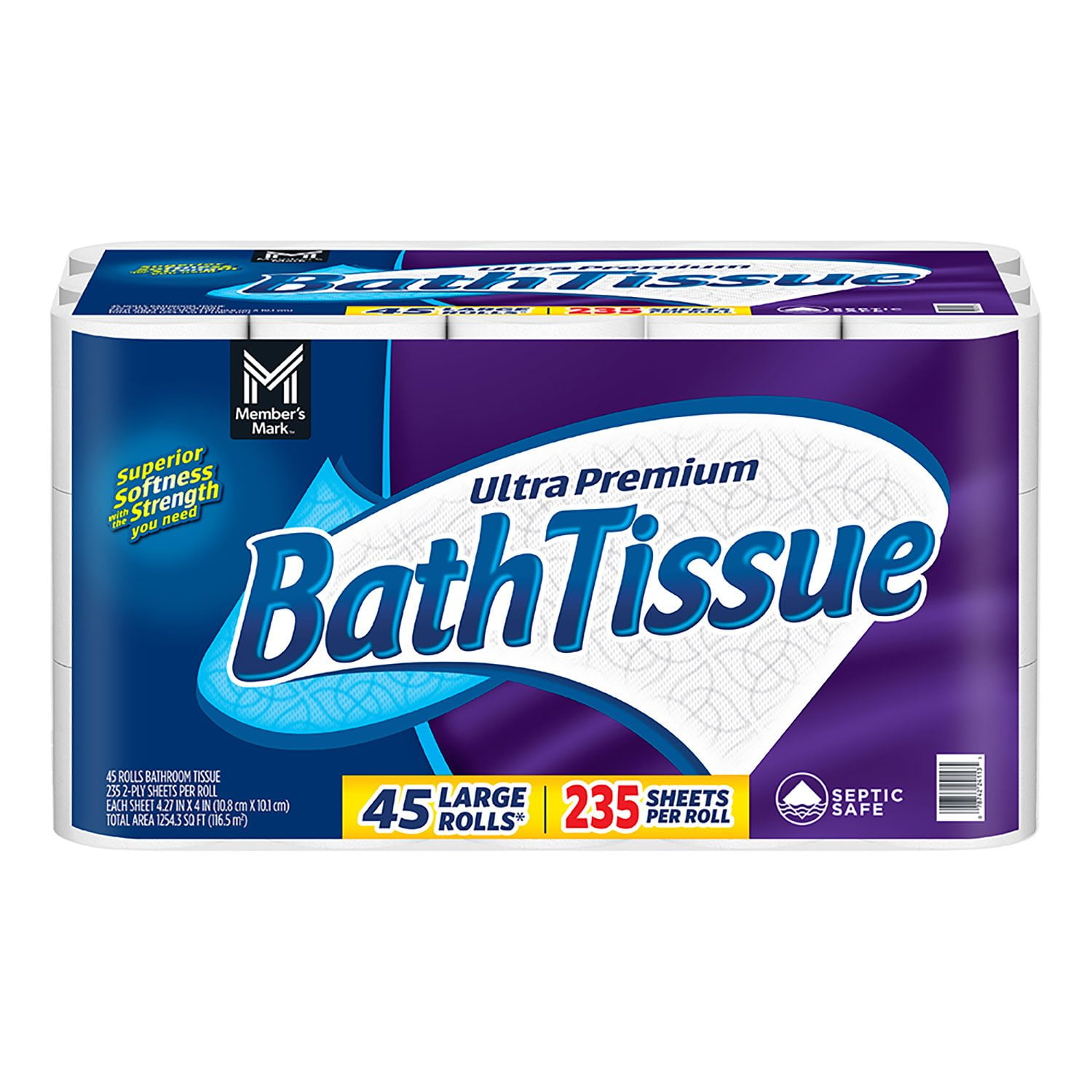
Image source: Sam's Club
How Much Money Do You Save With Member's Mark?
To accurately assess the value of Sam's Club paper products, shoppers must look past the total sticker price and calculate the cost per unit. Warehouse clubs rely on the psychological impact of large numbers—a $25 pack of toilet paper might seem expensive until you realize it contains enough square footage to last a family of four for several months. The true metric of value is the price per square foot and the price per sheet.
Breaking Down the Price Per Square Foot
When comparing Member's Mark to national brands found in standard grocery stores, the mathematical advantage becomes clear. National brands often utilize "shrinkflation"—reducing the number of sheets per roll while keeping the packaging size and price identical. Sam's Club, conversely, maintains strict volume standards for its private label.
For example, the Member's Mark Ultra Premium toilet paper provides 1,254 total square feet across its 45-roll pack. When broken down, this equates to approximately $0.02 per square foot. In contrast, a premium national brand like Quilted Northern typically costs around $0.03 per square foot when purchased at a standard supermarket. While a single penny difference may seem negligible, it represents a 33% price increase when scaled over thousands of square feet.
The savings are equally apparent in the kitchen. Member's Mark Select & Tear paper towels cost roughly $0.02 per square foot, whereas Bounty—often considered the premium standard—averages $0.04 per square foot. This means consumers are paying double for the national brand.
| Product Category | Brand | Estimated Cost Per Sq. Ft. | Value Assessment |
|---|---|---|---|
| Toilet Paper | Member's Mark Ultra Premium | $0.02 | High Value |
| Toilet Paper | Quilted Northern (Grocery) | $0.03 | Standard Value |
| Paper Towels | Member's Mark Select & Tear | $0.02 | High Value |
| Paper Towels | Bounty (Grocery) | $0.04 | Premium Pricing |
Calculating the Annual Membership Break Even Point
A standard Sam's Club membership costs $50 annually. To determine if the membership is justified solely by paper product purchases, we can calculate the break-even point based on the savings outlined above.
If a household saves approximately $10 on every bulk purchase of toilet paper compared to buying the equivalent volume of a national brand at a grocery store, they would need to purchase five 45-roll packs per year to recoup the $50 membership fee. According to industry usage statistics, an average family of four uses roughly 100 to 120 rolls of toilet paper annually. Therefore, purchasing just three packs of Member's Mark toilet paper covers more than half the membership cost. When you factor in the savings from paper towels, napkins, and trash bags (like Glad ForceFlex or Ziploc equivalents), the membership easily pays for itself within the first few months of the year.
Does Member's Mark Toilet Paper Beat Kirkland and Quilted Northern?
The rivalry between Sam's Club and Costco is a defining feature of the warehouse retail landscape. Consumers frequently debate whether Member's Mark or Costco's Kirkland Signature offers superior quality. While brand loyalty plays a significant role in these discussions, objective testing provides a clearer picture.
Why Experts Rank Sam's Club Over Costco
In recent years, independent consumer testing has challenged the long-held assumption that Kirkland Signature is the undisputed king of warehouse brands. Notably, findings from Rossen Reports indicated that Sam's Club paper products "crush" Costco's offerings in terms of overall value and performance. The testing highlighted that Member's Mark provided a more consistent texture and better structural integrity when wet.
When comparing the specifications directly, the Member's Mark Ultra Premium bath tissue comes in a massive 45-roll pack, with each roll containing 235 sheets. This results in a staggering 10,575 total sheets per package. This high-capacity configuration means fewer trips to the store and less frequent roll changes in the bathroom, a convenience factor that many families highly value.
Understanding the Texture and Lint Factors
One of the most common complaints regarding bulk toilet paper is the amount of lint it leaves behind. Budget brands often achieve their softness by using loosely bound fibers, which easily detach during use and create excess dust in the bathroom.
Member's Mark Ultra Premium is engineered as a 2-ply tissue specifically designed to mitigate this issue. The manufacturing process tightly binds the two layers, creating a smooth surface that significantly reduces lint production while maintaining a soft texture. While it may not possess the ultra-plush, lotion-infused feel of top-tier boutique brands, it strikes a highly effective balance between comfort and structural integrity, making it a remarkably strong contender for everyday household use.
What Are Top-Rated Paper Towels and Napkins at Sam's Club?
Beyond the bathroom, paper towels and napkins represent a significant portion of a household's disposable goods budget. Sam's Club offers several tiers of these products, catering to both residential families and commercial enterprises.
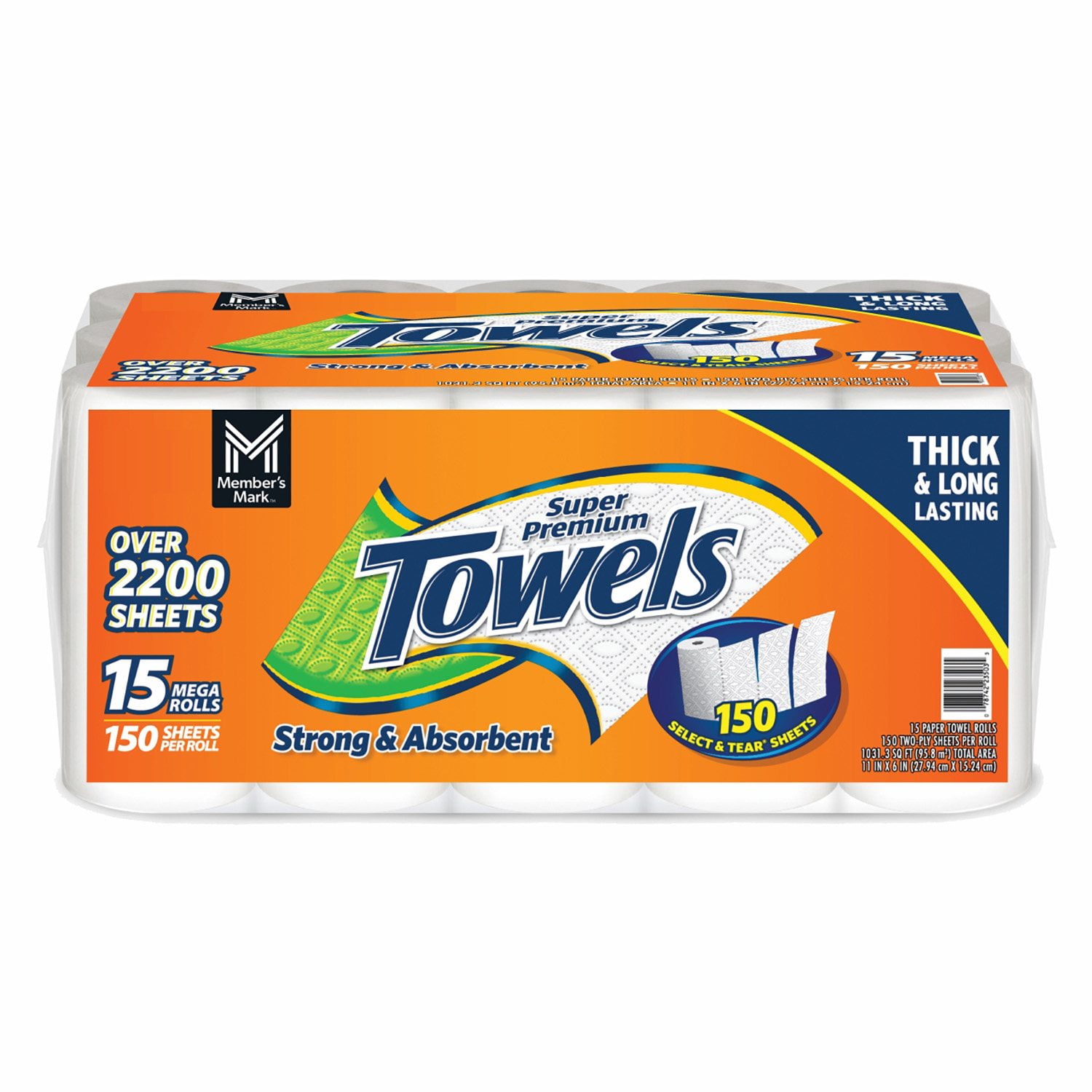
Image source: Sam's Club
Performance of Select and Tear Paper Towels
The flagship kitchen product is the Member's Mark Select & Tear 2-ply paper towels. Sold in 15-roll packs with 150 sheets per roll, these towels are designed to compete directly with Bounty's "Select-A-Size" format. The ability to tear off a half-sheet is a crucial feature for reducing waste, allowing users to select a smaller piece for minor spills and a full sheet for heavy-duty cleaning.
In terms of absorbency, the 2-ply construction features a quilted pattern that traps liquid efficiently. While Bounty is heavily marketed as "The Quicker Picker Upper," real-world usage suggests that Member's Mark handles standard kitchen spills—such as spilled milk, grease splatters, and countertop wipe-downs—with highly competitive efficiency. For deep scrubbing tasks on rough surfaces, a premium national brand might hold together slightly longer, but for 95% of daily household chores, the Member's Mark towels perform exceptionally well at half the cost.
Bulk Napkins for Families and Businesses
For households that frequently host gatherings, or for small businesses operating in the food service sector, the Member's Mark Everyday Napkins offer substantial savings. These napkins are typically sold in massive 1,200-count bundles (often divided into four packs of 300) for approximately $12.84.
This pricing structure brings the cost down to roughly $0.01 per napkin. They are 1-ply but feature a textured embossing that provides adequate thickness for standard mealtime use. Official documentation notes that these bulk configurations are specifically curated for restaurants, offices, and catering services, highlighting their commercial-grade reliability.
Are Member's Mark Paper Plates Safe for Your Microwave?
Disposable tableware is another category where warehouse clubs shine, particularly during summer barbecue seasons or holiday gatherings. The primary concern consumers have with paper plates is their durability under the stress of heavy, moist foods and their safety when exposed to microwave heat.
Advanced Soak Protection Tech
The Ultra Dinner plates feature a proprietary coating designed to repel liquids. This prevents gravies, dressings, and meat juices from seeping through the paper base and compromising the plate's structural integrity.
Microwave Safety Verified
These plates are officially rated for microwave use, allowing for safe reheating of leftovers without the paper igniting or releasing harmful chemicals into the food.
The Science of Advanced Soak Protection
The Member's Mark Ultra Dinner paper plates (typically sold in a 10-inch, 204-count package) are engineered with what the company calls "advanced soak protection." Unlike cheap, uncoated paper plates that quickly turn to mush when exposed to moisture, the Ultra Dinner plates utilize a specialized, food-safe coating.
While they are marketed as microwave-safe, there is an important nuance consumers should understand regarding high-fat foods. When foods with high fat or oil content (such as bacon or heavily buttered items) are microwaved, the fat can reach temperatures significantly higher than the boiling point of water. If heated for extended periods, these superheated oils can occasionally compromise the soak-proof coating, leading to minor seepage. For standard reheating of vegetables, pastas, or lean meats, the plates remain entirely stable.
Cut Resistance and Durability Tests
Durability is paramount when serving heavy meals like steak, barbecue ribs, or dense casseroles. The Ultra Dinner plates are constructed with a multi-layer pressing technique that provides substantial rigidity. In practical scenarios, users can comfortably use standard serrated steak knives on these plates without immediately slicing through to the table below. The raised rim design also prevents spills when carrying heavily loaded plates from a buffet line to a dining table, making them a top-tier option for event hosting.
Is Sam's Club Toilet Paper Safe for Septic Systems?
For homeowners living in rural areas or properties not connected to municipal sewer lines, the choice of toilet paper is a critical infrastructure decision. Using the wrong type of paper can lead to severe clogs, backed-up pipes, and thousands of dollars in septic repair bills.
Official Testing and Certification
Ultra-plush, lotion-infused toilet papers from premium boutique brands are notoriously problematic for septic tanks. Their long, strong fibers resist breaking down in water, leading to accumulation in the tank.
In contrast, Member's Mark Ultra Premium is officially "tested septic safe." The 2-ply design is engineered to dissolve rapidly once submerged and agitated in water. This rapid dissolution rate ensures that the paper breaks down efficiently within the septic tank's bacterial environment, preventing the formation of solid blockages in the drain field. For rural homeowners, this certification provides essential peace of mind.
Addressing Community Quality Concerns
While the overall consensus on Member's Mark quality is highly positive, it is important to acknowledge feedback from the broader consumer community. In various online forums and dedicated Sam's Club enthusiast groups, some members have occasionally reported inconsistencies between different batches of toilet paper.
Reports sometimes mention a specific package feeling slightly thinner or producing more lint than a previous purchase. These variations are typically attributed to shifts in regional manufacturing facilities or temporary supply chain adjustments. Fortunately, Sam's Club maintains a robust satisfaction guarantee. If a member purchases a batch that feels inconsistent with their expectations, the product can be returned to the club for a full refund or exchange, mitigating the risk of buying in such large quantities.
How to Get Bulk Paper Products Delivered to Your Door
One of the primary drawbacks of buying paper products in bulk is the sheer physical size of the items. Hauling a 45-roll pack of toilet paper and a 15-roll pack of paper towels through a crowded parking lot and fitting them into a standard sedan can be a logistical challenge. Sam's Club has developed several fulfillment methods to address this friction.
The Perks of a Sam's Club Plus Membership
For members who upgrade to the Sam's Club Plus membership (currently $110 annually), the logistics of bulk buying become significantly easier. Plus members receive free shipping on eligible online orders over $50.
Because paper products are bulky but relatively lightweight, they are perfect candidates for home delivery. A common strategy among savvy shoppers is to use paper products as "cart fillers." If you are purchasing $30 worth of non-perishable pantry items online, adding a $25 pack of toilet paper pushes the cart over the $50 threshold, unlocking free shipping and saving you a trip to the warehouse.
Using Subscriptions to Automate Your Pantry
To further streamline household management, Sam's Club offers a "subscription reorder" service through their app and website. This feature allows members to set up automated deliveries for consumable goods at regular intervals (e.g., every two months).
- Step 1: Locate your desired Member's Mark paper product on the Sam's Club app.
- Step 2: Select the "Subscribe" option instead of "Add to Cart."
- Step 3: Choose your delivery frequency based on your household's consumption rate.
- Step 4: Ensure your cart meets the $50 minimum (if relying on Plus shipping) to avoid delivery fees on recurring orders.
Note on Pricing: It is important to monitor your subscriptions, as prices for paper products can fluctuate. Sam's Club explicitly states that online prices may occasionally vary from in-club prices, sometimes carrying a slight premium to offset fulfillment costs.
Same Day Delivery via Instacart
For consumers who do not possess a Sam's Club membership but still wish to purchase Member's Mark paper products, third-party delivery services like Instacart provide a viable workaround. Instacart allows users to shop at Sam's Club as a guest. However, this convenience comes at a cost. Items purchased through Instacart without a membership typically feature a price markup, and users will also be responsible for delivery fees and driver tips. While not the most cost-effective method for regular stocking, it serves as a useful option in emergency situations.
Frequently Asked Questions
- Is Sam's Club toilet paper better than Costco's Kirkland brand?
- While preference is subjective, independent testing by consumer advocates like Rossen Reports has shown that Sam's Club's Member's Mark often outperforms Kirkland Signature in terms of structural integrity and overall value, making it a highly competitive alternative.
- How many sheets are in a Member's Mark toilet paper roll?
- The standard Member's Mark Ultra Premium bath tissue contains 235 sheets per roll. In a 45-roll package, this equates to 10,575 total sheets, providing excellent longevity for large households.
- Can I buy Sam's Club paper products online without a membership?
- Yes, non-members can purchase items through the Sam's Club website by paying a 10% surcharge on their order. Alternatively, non-members can use third-party delivery apps like Instacart, though item markups and delivery fees will apply.
- Are Member's Mark paper plates compostable?
- Generally, no. The Member's Mark Ultra Dinner plates feature an "advanced soak protection" coating to prevent leaks. This liquid-resistant barrier typically renders the plates non-compostable in standard municipal or backyard composting systems.
- What is an effective way to track Sam's Club stock during shortages?
- During periods of high demand, local Sam's Club enthusiast groups on Facebook are excellent resources. Members frequently post real-time updates and photos of aisle inventory, helping you avoid a wasted trip if paper products are temporarily out of stock.
The Bottom Line: Sam's Club paper products represent the "sweet spot" of warehouse shopping—offering commercial-grade reliability that significantly outperforms budget grocery brands, while remaining substantially cheaper than premium national labels.
- For Maximum Value: Choose the Member's Mark Ultra Premium TP (45-roll) to secure a cost of just ~$0.02 per square foot.
- For Kitchen Strength: Utilize Member's Mark Select & Tear Towels, which offer half-sheet sizing for efficient spill management.
- For Event Hosting: Rely on the Ultra Dinner Plates (204-ct) for their advanced soak protection and cut resistance.
- For Septic Safety: Rest easy knowing the 2-ply bath tissue is officially tested and certified safe for rural septic systems.
- For Logistics: Leverage a Plus Membership to get bulky paper goods shipped free on orders over $50, saving time and vehicle space.