Where to Find Shold's Landscape Products and Bulk Materials in Jefferson County
Snapshot: Shold Landscape Products is a primary supplier of bulk soil, gravel, bark, and organic garden materials on the Olympic Peninsula. Operating alongside Shold Excavating and Cotton Redi-Mix, they provide an integrated solution for both residential gardening and heavy commercial construction.
Primary Location: Port Hadlock, WA (Near the intersection of Old Hadlock Rd and Promwell Rd).
Standard Hours: Monday – Friday, 8:00 AM to 4:00 PM (subject to seasonal changes).
Navigating the logistics of a major landscaping or construction project on the Olympic Peninsula requires reliable access to high-volume materials. Whether you are amending a small vegetable garden or grading a quarter-mile private driveway, sourcing the right aggregate and soil is a critical first step. Shold Landscape Products operates as a central hub for these materials in Jefferson County.
Because the business is deeply integrated with its sister companies—Shold Excavating and Cotton Redi-Mix—it offers a unique operational scale. Customers can source everything from a single cubic yard of certified organic compost for a raised bed to multiple dump-truck loads of crushed rock for a commercial foundation. This article breaks down their current inventory, explains how to choose the right materials for Pacific Northwest weather conditions, and clarifies the logistics of visiting their facilities or arranging delivery.
Image source: Shold Excavating
What Can You Buy at Shold’s Landscape Products?
The inventory at the Port Hadlock yard is divided into several core categories, catering to both aesthetic gardening needs and structural construction requirements. Understanding the specific properties of these materials is essential for long-term project success, particularly given the heavy seasonal rainfall and varied soil types found across Jefferson County.
Bulk Soil and Certified Organic Compost Options
Soil is rarely a one-size-fits-all product. The native soil on the Olympic Peninsula often leans heavily toward either fast-draining sand (common near the coastlines and bluffs) or dense, compacted glacial till. To correct these extremes, Shold offers a variety of bulk soil blends and amendments.
Their topsoil blends are typically formulated to provide a balanced medium for general planting, lawn establishment, and raised beds. For gardeners focused on edible crops, their Certified Organic compost is a highly recommended option. Organic compost introduces vital microorganisms into the soil food web, improving moisture retention in sandy soils while breaking up heavy clay. Furthermore, using a certified organic product ensures that no synthetic persistent herbicides—which can occasionally contaminate municipal compost streams and stunt vegetable growth—are introduced into your food garden.
For structural needs, such as filling in a depression before pouring a concrete slab or building a retaining wall, they also supply standard fill dirt. Fill dirt lacks the organic matter of topsoil, which is actually an advantage for construction, as organic matter decomposes and settles over time, leading to unstable foundations.
Gravel and Decorative Rock for Driveways and Paths
Managing water runoff is a constant challenge in the Pacific Northwest. The right gravel selection dictates whether a driveway remains stable during winter storms or washes out into a muddy rut. Shold Landscape Products stocks multiple grades of rock to address these specific engineering needs.
For driveways and high-traffic parking areas, crushed rock (often referred to as "minus" gravel, such as 5/8" minus) is a top-tier choice. The term "minus" indicates that the gravel includes the crushed stone dust (fines). When compacted, these angular stones and fines lock together to form a hard, nearly impermeable surface. Conversely, for drainage applications like French drains or decorative pathways, washed round rock or pea gravel is utilized. Because round rock lacks fines and angular edges, it does not compact, allowing water to flow freely through the gaps.
Bark and Wood Chips for Moisture Retention
Applying a thick layer of mulch is one of the most effective strategies for suppressing weeds and retaining summer moisture in Washington gardens. The facility offers several wood-based ground covers, primarily categorized by size and texture.
Fine bark provides a manicured, dark aesthetic that breaks down relatively quickly, feeding the top layer of soil. Medium bark offers a longer lifespan and is highly effective at preventing weed seed germination. Wood chips, often a byproduct of local timber processing, are an excellent choice for informal walking paths or large, naturalized restoration areas. It is important to note that fresh wood chips can temporarily tie up soil nitrogen as they decompose, so they are generally recommended as a surface dressing rather than a soil amendment to be tilled under.
Indoor and Outdoor Pottery and Garden Seeds
Beyond bulk aggregates, the retail side of the business functions as a traditional garden center. They stock a diverse selection of indoor and outdoor pottery, allowing customers to scale their container gardening efforts. Container gardening is particularly popular in areas of Jefferson County where deer browsing makes traditional ground-level gardening difficult.
Additionally, they supply seasonal garden seeds. A notable feature of their inventory is the emphasis on Verified NON-GMO seeds. Sourcing seeds adapted to the local maritime climate—characterized by cool, wet springs and dry, mild summers—significantly improves germination rates and overall crop yields compared to generic seeds sourced from national hardware chains.
How to Choose the Right Material for Your Project
Selecting the correct material prevents costly rework. Applying the wrong type of gravel can lead to drainage failures, while choosing the wrong soil blend can stunt plant growth. The following matrix provides a baseline guide for matching materials to common landscaping scenarios.
| Material Type | Primary Application | Key Benefit / Characteristic |
|---|---|---|
| 5/8" Minus Crushed Rock | Driveways, parking pads, base layers | Contains fines that compact tightly, creating a hard, stable surface that resists rutting. |
| Washed Drain Rock | French drains, dry creek beds | Allows maximum water flow; does not compact. Prevents pooling in low areas. |
| Certified Organic Compost | Vegetable beds, soil amendment | Boosts microbial life, improves moisture retention, and provides slow-release nutrients. |
| Medium Bark | Shrub beds, weed suppression | Long-lasting ground cover that insulates roots from extreme temperature fluctuations. |
| Fill Dirt | Grading, structural backfill | Lacks organic matter, meaning it will not decompose and settle under heavy loads. |
Once you have identified the correct material, the next challenge is determining how to purchase it. Customers frequently debate whether to buy materials in bulk or rely on pre-packaged bags from a hardware store.
Buying in Bulk (By the Yard)
Bulk materials are sold by the cubic yard (27 cubic feet). This is the most economical approach for any project requiring significant volume. A standard full-size pickup truck can typically haul between 1.5 to 2 cubic yards of lightweight bark, but only about 0.5 to 1 cubic yard of heavy soil or wet gravel due to weight capacity limits. Bulk purchasing requires either a suitable vehicle or paying a delivery fee, but the cost-per-volume is significantly lower.
Buying Bagged Materials
Bagged soils and barks usually come in 1 to 2 cubic foot increments. To equal a single cubic yard, you would need to purchase and transport roughly 14 to 27 bags. While this is highly inefficient for large projects, bagged materials are a practical choice for small container gardens, indoor plants, or for customers who do not have access to a truck and want to keep the interior of their SUV clean.
Where Exactly is Shold’s Located in Port Hadlock?
For first-time visitors, locating the correct entrance to the facility can be slightly confusing due to how mapping software interprets the property lines. The business occupies a large footprint that spans multiple access points.
Navigating the Intersection of Old Hadlock Road and Promwell Road
Various online directories list the primary address as either 461 Old Hadlock Rd or 121 Promwell Rd. According to local business listings, these addresses refer to the same general complex located near the intersection of these two roads.
For practical purposes, the facility is divided by function. Heavy commercial equipment, dump trucks, and the Cotton Redi-Mix operations typically utilize wider commercial access points designed for wide turning radiuses. Retail customers arriving in personal pickup trucks or towing small utility trailers to purchase garden center items or half-yards of bark should look for the designated retail office entrance. When turning off State Route 19, proceed slowly and follow the physical signage directing retail traffic to the main office for weighing and payment before proceeding to the material piles.
Visiting the Port Townsend Satellite Office
In addition to the main Port Hadlock yard, business directories note a presence at 1615 W Sims Way in Port Townsend. This location serves the northern end of the Quimper Peninsula. Customers should verify ahead of time whether this Sims Way location carries the specific bulk materials they need on any given day, or if it functions primarily as a satellite office for coordinating larger deliveries from the main Hadlock yard.
How to Coordinate Delivery and Excavation Services
One of the primary advantages of utilizing this specific supplier is the integration of their three business arms. For homeowners undertaking major property renovations, managing multiple contractors can lead to scheduling conflicts. The Shold and Cotton corporate structure allows for a streamlined, multi-step workflow.
Before any new materials can be brought in, the site must be prepared. Shold Excavating handles the heavy lifting: clearing brush, pulling stumps, grading slopes to ensure proper water runoff, and digging trenches for utilities or foundations. Proper grading is critical; adding expensive gravel to a poorly graded driveway will result in immediate potholing during the first heavy rain.
Once the ground is prepped and the fill dirt is compacted, Cotton Redi-Mix can be scheduled to pour concrete. This applies to driveway aprons, retaining wall footings, garage slabs, or custom patios. Coordinating the concrete pour with the same company that performed the excavation ensures that the site dimensions and base layers meet the exact specifications required by the concrete dispatchers.
With the heavy construction complete, the final phase involves aesthetics and planting. Shold Landscape Products delivers the topsoil for the newly defined garden beds, the crushed rock to finish the driveway surface, and the bark mulch to protect the new landscaping. Because the delivery trucks are dispatched from the same network, scheduling these final loads is highly efficient.
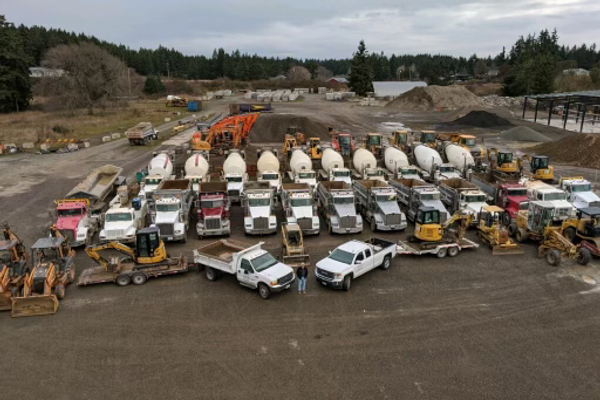
Image source: www.cottonshold.com
Delivery Logistics: For customers who do not require excavation but simply need materials delivered, the company operates a fleet of dump trucks. They service a wide radius across Jefferson County. Delivery to remote areas, such as Quilcene or the outer edges of the Olympic Peninsula, is routinely handled, though customers should call the dispatch office directly to confirm specific zone rates and minimum yardage requirements for long-distance hauling.
Why Organic and Non-GMO Standards Matter for Your Garden
Jefferson County has a rich agricultural history and a strong community focus on sustainable, environmentally conscious farming. Shold Landscape Products aligns with this regional ethos by offering materials that meet strict ecological standards.
The distinction of offering Certified Organic bulk compost is significant. Many municipal or budget composts are created from residential yard waste bins. While recycling yard waste is generally positive, these bins often contain grass clippings treated with persistent broadleaf herbicides (like clopyralid or aminopyralid). These chemicals can survive the composting process and remain active in the soil for years, severely damaging sensitive crops like tomatoes, peas, and beans. By sourcing certified organic compost, gardeners mitigate the risk of accidental herbicide contamination, ensuring a safe growing environment for food crops.
Similarly, their commitment to supplying Verified NON-GMO seeds supports local biodiversity. Non-genetically modified seeds are traditionally bred to adapt naturally to environmental stressors. In the context of the Olympic Peninsula, this means selecting plant varieties that naturally resist local fungal diseases (exacerbated by the damp climate) without relying on systemic chemical treatments. Furthermore, traditional open-pollinated and non-GMO seeds support the local pollinator populations, including native mason bees and bumblebees, which are vital to the health of the broader Pacific Northwest ecosystem.
When amending local soils, the goal is to build a robust soil food web. The combination of organic compost and natural mulches encourages the proliferation of mycorrhizal fungi. These beneficial fungi attach to plant roots, effectively extending the root system's reach and improving the plant's ability to absorb water and phosphorus. This natural synergy reduces the need for synthetic fertilizers, which can easily leach through sandy soils and run off into the Puget Sound or Hood Canal, contributing to harmful algae blooms.
Frequently Asked Questions
The Bottom Line
Shold Landscape Products serves as a highly capable, integrated resource for both residential gardeners and commercial contractors in Jefferson County. By combining retail landscape supplies with heavy excavation and concrete services, they simplify the logistics of complex property improvements.
- Verify your entrance: When arriving at the Port Hadlock facility, follow signage to ensure you use the retail office entrance rather than the commercial heavy-equipment lanes.
- Calculate accurately: Use the Length × Width × Depth / 27 formula to determine your exact cubic yardage needs before ordering to avoid multiple delivery fees.
- Prioritize organic materials: Choose their Certified Organic compost when building raised beds for edible crops to prevent accidental herbicide contamination.
- Match gravel to function: Select crushed "minus" rock for stable driveways and washed round rock for drainage applications.
- Leverage the network: For large projects, coordinate your site clearing, concrete pouring, and final material delivery through their interconnected business divisions for smoother scheduling.