Where to Find Authentic Tarta de Santiago Near You or Order It Online
Finding a traditional Tarta de Santiago locally can be challenging outside of major metropolitan areas with dedicated Spanish bakeries. If you cannot find a local artisanal shop, your top options are ordering from nationwide importers like La Tienda or specialized regional bakeries like Cibeles Bakery (Florida) and Saborearte, which offer shipping. Alternatively, because the authentic recipe requires only three primary ingredients (almonds, sugar, and eggs) and naturally contains no gluten, baking it at home is a highly accessible and popular solution.
The Tarta de Santiago is a marvel of Spanish culinary minimalism. Originating in the Galicia region of northwestern Spain, this dense, moist almond cake has served as the traditional reward for pilgrims completing the grueling Camino de Santiago (Way of St. James) for centuries. Today, its naturally gluten-free profile and rich, nutty flavor have made it a highly sought-after dessert worldwide.
However, tracking down an authentic version locally often leads to frustration. Standard American and British bakeries rarely carry it, and when they do, the recipes are frequently modified with wheat flour or artificial extracts. This guide explores exactly what constitutes an authentic Galician almond cake, highlights top-rated bakeries that ship nationwide, and provides the insider knowledge you need to bake a flawless version in your own kitchen.
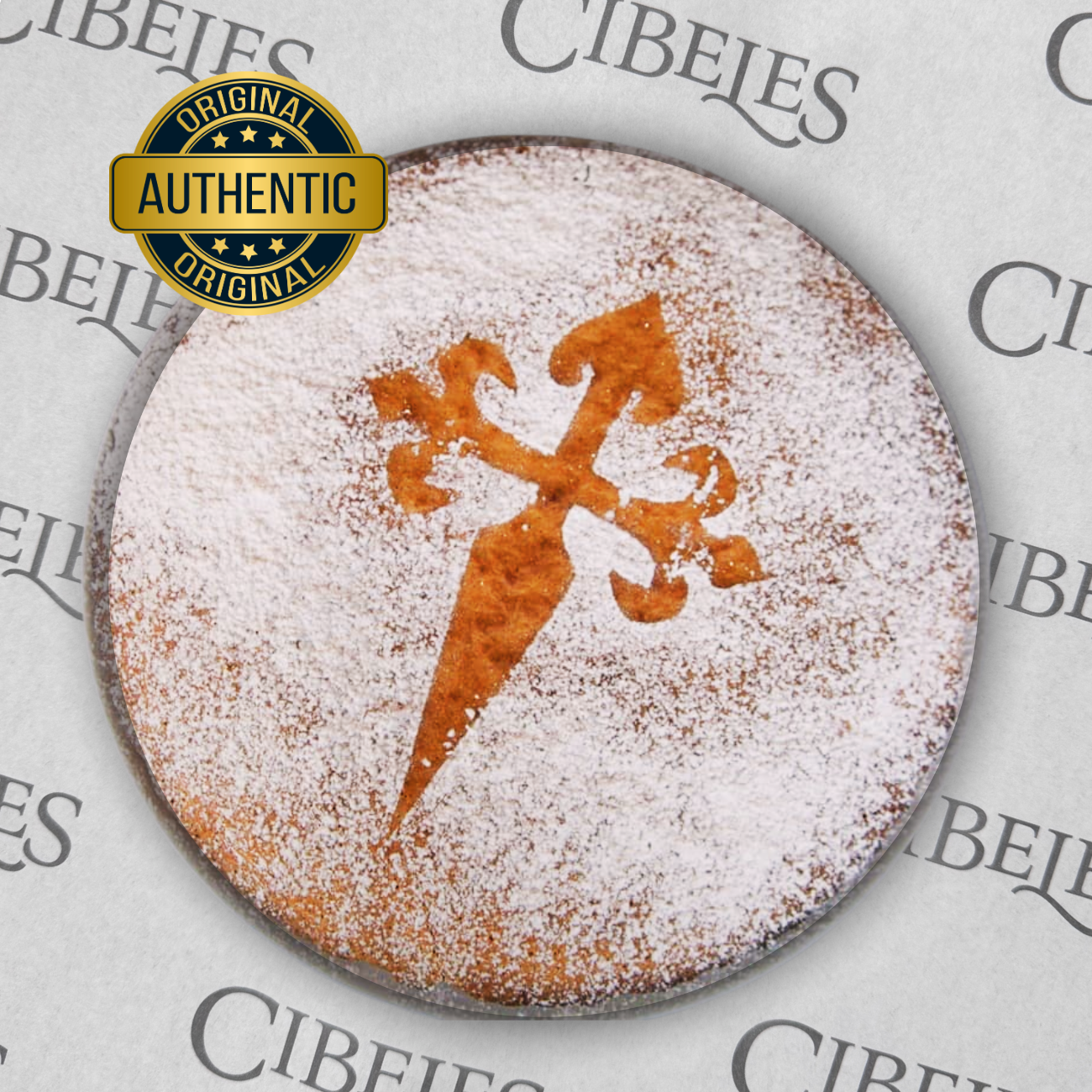
Image source: CIBELES
What Makes a Tarta de Santiago Truly Authentic?
Not every almond cake qualifies as a true Tarta de Santiago. In Spain, the dessert is protected by strict culinary laws designed to preserve its historical integrity. Understanding these standards is crucial when evaluating bakeries or selecting a recipe.
- PGI Certification (Protected Geographical Indication)
- In 2006, the European Union granted the cake PGI status. According to these official regulations, an authentic Tarta de Santiago must contain at least 33% almonds by weight, alongside sugar and eggs. The addition of wheat flour, butter, or oil is strictly prohibited in the traditional batter.
- The Marcona Almond Requirement
- While standard California nonpareil almonds are commonly used in modern adaptations, traditionalists insist on Spanish Marcona almonds. Marconas are rounder, sweeter, and possess a significantly higher oil content. This natural fat is what gives the cake its signature moist, dense interior without the need for added dairy.
- The Cruz de Santiago
- A visual hallmark of the dessert is the Cross of Saint James stenciled in powdered sugar on the top crust. This tradition reportedly began in 1924 at the Casa Mora bakery in Santiago de Compostela and quickly became the universal standard for identifying the cake.
The "No Extract" Debate
One of the most reliable ways to spot a mass-produced or inauthentic cake is the presence of almond extract. Renowned culinary historians and authors, such as Claudia Roden in her seminal work The Food of Spain, emphasize that the flavor should derive entirely from high-quality ground almonds and a subtle hint of citrus zest (typically lemon). Almond extract contains benzaldehyde, which imparts a sharp, almost cherry-like artificial flavor that overpowers the delicate, earthy notes of the raw nuts.
When vetting a bakery, ask if they use extract. A truly premium establishment will rely solely on the natural oils of the almonds, perhaps enhanced by a splash of traditional Spanish liquor, rather than artificial flavorings.
Where to Buy Authentic Tarta de Santiago Near You and Online
If you are searching for a local option, your success will largely depend on your proximity to specialized Spanish markets or artisanal bakeries. Below is a curated selection of notable establishments that offer the cake, either locally or via nationwide shipping.
Known primarily for their savory offerings, this highly regarded artisanal shop also produces an excellent individual-sized Tarta de Santiago. Priced at approximately $4.59 per portion, it is a convenient option for those seeking a personal dessert rather than a full-sized cake. View their menu.
For those needing a centerpiece dessert, Cibeles Bakery offers a full 7-inch (18cm) traditional cake for $39.00. They adhere to the naturally gluten-free recipe and provide local delivery within the Miami-Dade and Broward county areas, making them a top-tier choice for South Florida residents. Check availability.
This popular North Carolina establishment offers a well-reviewed version of the cake. However, they are transparent about their facility: while the recipe itself contains no wheat, it is prepared in a shared kitchen, meaning cross-contamination is possible. See their allergen notes.
Saborearte specializes in individual, gluten-free, and dairy-free portions. They offer local delivery within a 10-mile radius of their physical location, but also provide shipping options, making them a strong contender for buyers outside major metropolitan hubs. Order online.
The Nationwide Importer Solution
If local bakeries fail you, specialized importers are your most reliable fallback. Companies like La Tienda (in the US) and Brindisa (in the UK) regularly import authentic, PGI-certified cakes directly from Galicia. These cakes are baked in Spain, vacuum-sealed, and shipped internationally, ensuring you receive a product that meets exact historical standards.
Decision Framework: Should You Buy It or Bake It?
Because the ingredients are relatively simple, many consumers find themselves weighing the convenience of ordering against the satisfaction (and cost savings) of baking. Use the following framework to determine the most practical approach for your situation.
| Approach | Average Cost | Time Investment | Authenticity Level | Dietary Safety (Celiac) |
|---|---|---|---|---|
| Local Bakery | $5 (slice) - $40 (whole) | Low (Immediate pickup) | Variable (Often uses California almonds) | Moderate Risk (Shared equipment common) |
| Nationwide Shipping | $30 - $50 + Shipping | 3-5 Days | High (Often imported from Spain) | High (If certified GF facility) |
| Baking at Home | $15 - $25 (Ingredients) | 1.5 Hours | High (You control the ingredients) | Maximum Safety (Complete control) |
You might wonder how a moist cake survives nationwide shipping without spoiling. The Tarta de Santiago travels exceptionally well due to its high ratio of sugar and almond oil, which act as natural preservatives. A properly wrapped cake will remain fresh at room temperature for at least 3 days, can be refrigerated for a week, and freezes beautifully for up to 3 months.
Is Tarta de Santiago Always Safe for Celiacs?
One of the most common reasons people search for this specific dessert is its reputation as a naturally gluten-free treat. Because the traditional recipe relies entirely on ground almonds for structure, it requires zero wheat flour. However, the label "naturally gluten-free" can be dangerously misleading for individuals with Celiac disease.
The Cross-Contamination Paradox
While the ingredients are safe, the environment in which the cake is baked often is not. Many local bakeries produce Tarta de Santiago alongside traditional breads, croissants, and wheat-based cakes. In a commercial kitchen, airborne flour dust can easily settle on surfaces, mixing bowls, and baking pans.
For example, Camino Bakery explicitly lists wheat as a potential allergen in their facility, despite the cake itself containing no flour. This level of transparency is commendable, but it highlights a critical issue: a naturally gluten-free recipe does not guarantee a gluten-free product.
How to Vet a Bakery for Dietary Safety
If you have Celiac disease or a severe gluten intolerance, you must ask specific questions before purchasing:
- Is the cake baked in a dedicated gluten-free facility? (If yes, it is generally safe).
- If not, do you use separate ovens and mixers for your gluten-free items?
- Are the baking pans shared with wheat products?
If the bakery cannot provide confident answers to these questions, your safest option is to purchase a certified gluten-free cake online or bake it yourself in a controlled environment.
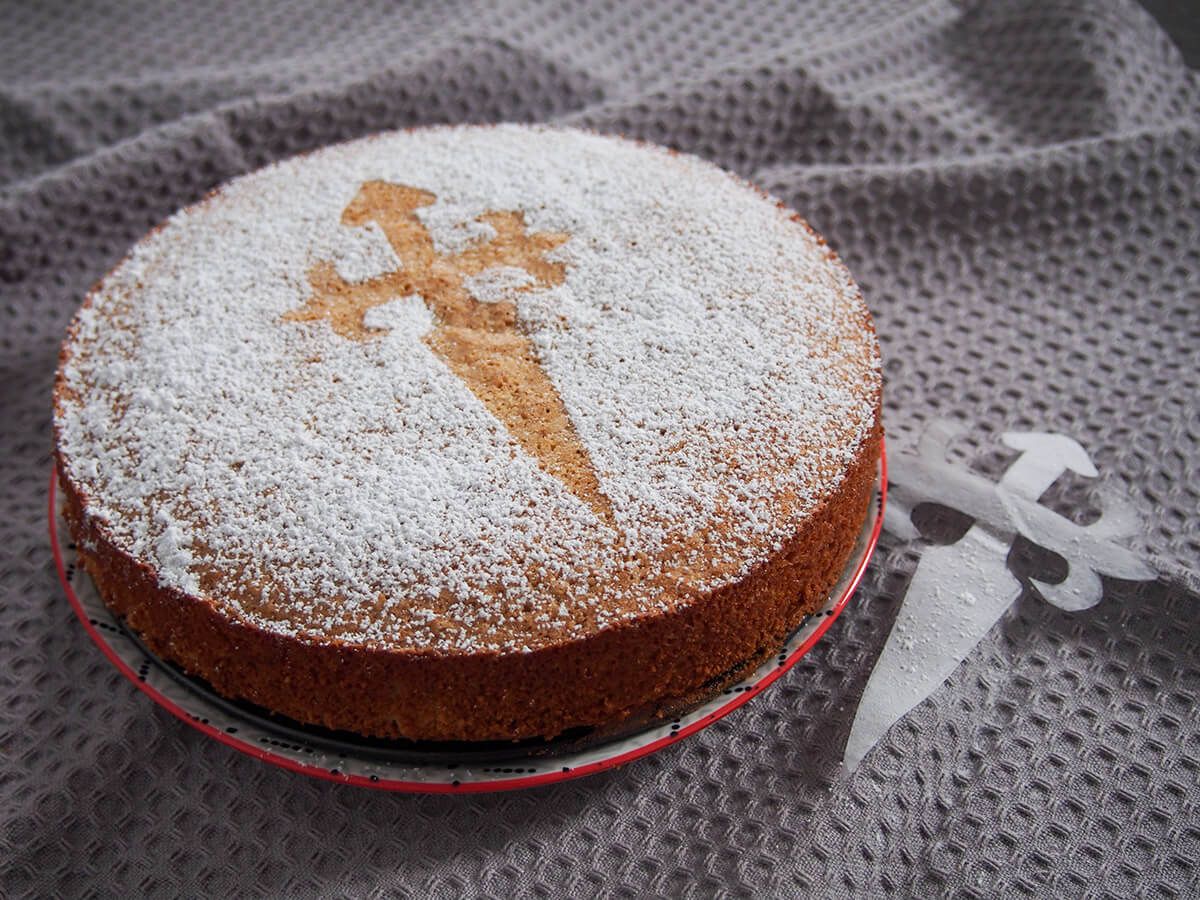
Image source: Caroline's Cooking
How to Make an Authentic Tarta de Santiago at Home
If local options fall short, baking this cake at home is a highly rewarding alternative. The process is straightforward, but achieving the correct texture requires specific techniques. According to traditional recipes, the cake should be dense and moist, not light and spongy like a Victoria sponge.
The "Lift" Method vs. Baking Powder
A point of contention among bakers is the use of raising agents. Some modern recipes incorporate baking powder to guarantee a rise. However, purists argue that authentic Tarta de Santiago should rely entirely on the mechanical aeration of eggs.
To achieve this, use the "Lift" method: beat the eggs and sugar together vigorously for several minutes until the mixture becomes pale, thick, and significantly increased in volume. This incorporates enough air to give the cake a delicate crumb and a slightly chewy, crisp crust without the need for chemical leaveners. Once the eggs are whipped, gently fold in the ground almonds and lemon zest to avoid deflating the batter.
The Liquor Secret
While lemon zest is standard, many Galician grandmothers incorporate a splash of alcohol to enhance moisture and depth of flavor. A tablespoon of Aguardiente (a Spanish pomace brandy), sweet sherry, or even Amaretto can elevate the batter. The alcohol bakes off in the oven, leaving behind a rich, complex aroma that complements the almonds.
Mastering the Stencil Process
The cake is not complete without the Cruz de Santiago. If you do not own a professional metal stencil, you can easily create one at home:
- Print a template of the Cross of Saint James on heavy cardstock paper.
- Carefully cut out the shape using a craft knife.
- Allow the baked cake to cool completely. If the cake is even slightly warm, the powdered sugar will melt into a sticky glaze.
- Place the paper cross gently in the center of the cake.
- Use a fine-mesh sieve to dust a generous, even layer of powdered sugar over the entire surface.
- Using tweezers or the tip of a knife, carefully lift the paper stencil straight up to reveal the negative space cross beneath.
How to Enjoy Tarta de Santiago Like a Pilgrim
To fully appreciate this dessert, it helps to understand its cultural context. The Camino de Santiago is a network of ancient pilgrim routes stretching across Europe, all converging at the Cathedral of Santiago de Compostela in Galicia. For hundreds of years, weary travelers completing this arduous journey were greeted with this calorie-dense, restorative almond cake.
As noted in various Camino community discussions, the experience of eating the cake is deeply tied to the atmosphere of Galicia. To replicate this experience at home, pay attention to pairings and serving temperatures.
Traditional Pairings
The cake is incredibly versatile, serving as both a morning pastry and an after-dinner dessert. The pairing dictates the mood:
- Morning (The Pilgrim's Breakfast): Serve a slice alongside a strong café con leche (espresso with steamed milk). The bitterness of the coffee perfectly cuts through the dense sweetness of the almond sugar crust.
- Evening (The Celebratory Dessert): Pair the cake with a glass of dessert wine, such as a Pedro Ximénez sherry, or a shot of Orujo de Galicia. Orujo is a traditional Galician spirit distilled from the grape skins left over from wine production, offering a fiery contrast to the rich cake.
The Importance of Serving Temperature
Because the cake relies on almond oil and eggs for moisture, serving it cold directly from the refrigerator will result in a hard, unyielding texture. If you have stored the cake in the fridge to extend its shelf life, you must let it sit at room temperature for at least one hour before serving. This allows the natural fats to soften, returning the crumb to its intended moist, melt-in-the-mouth consistency.
Frequently Asked Questions
How long does Tarta de Santiago last?
Why is there a cross on the cake?
Can I use almond meal instead of fine almond flour?
Is Tarta de Santiago keto-friendly?
Is the cake dairy-free?
Final Thoughts
Whether you are reminiscing about a past pilgrimage across Spain or simply seeking a rich, naturally gluten-free dessert, the Tarta de Santiago offers a unique blend of history and flavor. Finding it locally requires a bit of effort, but the alternatives are highly accessible.
- Verify the ingredients: Authentic versions contain at least 33% almonds and absolutely no wheat flour.
- Check for cross-contamination: If you are Celiac, always ask local bakeries about shared equipment, as flour dust is a common hazard.
- Embrace shipping: Because the cake's high fat content acts as a preservative, ordering from nationwide importers is a highly reliable option.
- Avoid artificial extracts: A premium cake relies on the natural oils of Marcona almonds and fresh lemon zest, not almond extract.
- Serve it correctly: Never serve the cake cold; allow it to reach room temperature and pair it with espresso or a Spanish dessert wine.