If you have received a call from a 585 number, you are likely dealing with someone in Western New York. Established in 2001 as a split from the older 716 area code, 585 covers a diverse landscape ranging from the high-tech imaging hubs of Rochester to the scenic vineyards of the Finger Lakes. While most of the United States has transitioned to mandatory 10-digit dialing, 585 remains a technical anomaly, offering a level of convenience that many residents still appreciate.
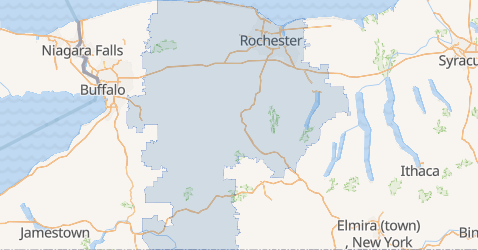
Image source: 24 Time Zones
Which Cities and Counties Use the 585 Area Code?
The 585 area code is not limited to just the city of Rochester. It encompasses eight primary counties and dozens of smaller towns that form the economic backbone of the region. According to official North American Numbering Plan records, the code was designed to provide long-term relief for the growing population of the Rochester metropolitan area.
The following counties are fully or partially served by 585:
- Monroe County: The most populous county in the region, home to Rochester, Brighton, Greece, and Henrietta.
- Genesee County: Centered around Batavia, this area is a key agricultural and manufacturing hub.
- Livingston County: Includes Geneseo (home to SUNY Geneseo) and the stunning Letchworth State Park.
- Ontario County: Home to Canandaigua and Victor, representing the gateway to the Finger Lakes.
- Orleans County: Includes Albion and Medina, situated along the historic Erie Canal.
- Wyoming County: Known for its rural character and the village of Warsaw.
- Allegany County: Serving the Southern Tier, including Belmont and Wellsville.
- Steuben & Yates Counties: Small portions of these counties also fall within the 585 boundary.
Major cities within this footprint include Batavia, Canandaigua, Brockport, Albion, Medina, and Geneseo. Each of these locations contributes to a regional identity that is distinct from the Buffalo-centric 716 area or the Syracuse-centric 315 area.
Geographic Edge Cases and ZIP Code Overlaps
Geography is rarely as clean as a map suggests. In the 585 region, there are several "edge cases" where phone service boundaries don't perfectly align with municipal lines. One notable example is the Farmington split. In Ontario County, the New York State Thruway often acts as an unofficial boundary, but some residents in the northern parts of the county may find their neighbors using the 315 or 680 area codes instead of 585.
Furthermore, some ZIP codes near the western border are split between 585 and 716. This is a remnant of the 2001 split where the geographic footprint of 716 was physically reduced. If you are moving to a town like Akron or Alden, it is vital to verify which area code serves your specific street, as these towns sit right on the border of the Rochester and Buffalo calling areas.
Why Does the 585 Area Code Still Allow 7-Digit Local Dialing?
In recent years, the Federal Communications Commission (FCC) mandated 10-digit dialing for the vast majority of U.S. area codes. This change was primarily driven by the implementation of the 988 National Suicide Prevention Lifeline. Any area code that used "988" as a central office prefix (the first three digits of a 7-digit number) was required to move to 10-digit dialing to prevent accidental calls to the lifeline.
As of 2026, the 585 area code ranks among the fewer than 71 codes in the United States that still permit 7-digit dialing. This is because 585 does not have any active phone numbers starting with the 988 prefix. This technical rarity provides a small but notable convenience for local residents who can still reach neighbors and local businesses without inputting the area code.
| Dialing Type | When to Use | Requirement |
|---|---|---|
| 7-Digit Dialing | Calling within 585 to another 585 number | Optional (10-digit also works) |
| 10-Digit Dialing | Calling from 585 to 716, 315, or 607 | Mandatory |
| 11-Digit Dialing | Long distance calls (1 + Area Code + Number) | Mandatory for landlines |
How to Identify and Block 585 Area Code Text Scams
While 585 is a legitimate geographic code, it has unfortunately become a frequent tool for "mirror spoofing" and SMS-based fraud. Scammers often use Voice over IP (VoIP) technology to display a 585 caller ID, hoping that a local number will increase the likelihood of the victim answering.
The "Wrong Number" Script and WhatsApp Pivot
One of the most common scams targeting 585 users is the "Wrong Number" text. It typically begins with a friendly, casual message such as:
- "Are you busy tomorrow?"
- "U at home? I'm coming over."
- "Is this [Random Name]? This is Sarah from the gym."
If you respond to clarify that they have the wrong number, the scammer will attempt to build a rapport, eventually pivoting the conversation to WhatsApp. Once on WhatsApp, they often introduce "investment opportunities" in cryptocurrency or foreign exchange. This is a significant advancement in social engineering known as "Pig Butchering," where the scammer "fattens up" the victim with fake friendship before stealing their funds.
Mirror Spoofing Explained
Have you ever received a call from a number that looks almost exactly like yours? If the first six digits (Area Code + Prefix) match your own, you are witnessing mirror spoofing. Scammers assume you are more likely to trust a number that appears to be from your immediate neighborhood or even your own service provider. If you see your own number calling you, do not answer; it is a certain sign of a fraudulent attempt.
What Time Zone Is the 585 Area Code in Right Now?
The 585 area code operates within the Eastern Time Zone. This is the same time zone used by New York City, Washington D.C., and Atlanta. Because the region observes Daylight Savings Time, the offset from Coordinated Universal Time (UTC) changes twice a year.
- Standard Time (EST): UTC-5 (Typically from November to March).
- Daylight Time (EDT): UTC-4 (Typically from March to November).
If you are calling a business in Rochester from the West Coast, remember that they are three hours ahead of Pacific Time. For international callers, the 585 region is generally five hours behind London (GMT) during the winter months.
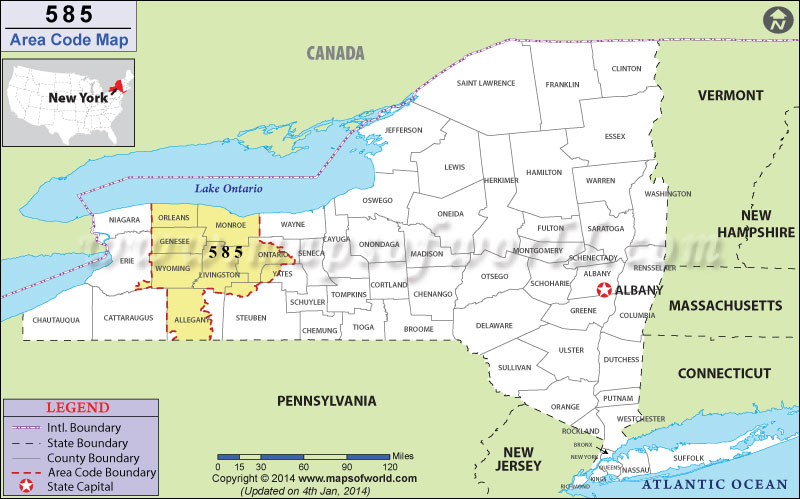
Image source: World Map
The Economic Profile of the Rochester and Finger Lakes Region
For businesses looking to expand into the 585 area, the demographic data suggests a stable and attractive market. Rochester has transitioned from its historical reliance on "The Big Three" (Kodak, Xerox, and Bausch & Lomb) into a diversified economy focused on optics, photonics, and healthcare.
Key economic indicators for the 585 region include:
- Median Household Income: Approximately $67,995, according to recent regional data.
- Wealth Distribution: Roughly 30.47% of households earn over $100,000 annually, with 14.77% exceeding $150,000.
- Dual-Income Households: A notable 51.40% of families are dual-income earners, indicating a high level of disposable income for B2C services.
- Education: The presence of the University of Rochester and RIT ensures a highly skilled workforce, particularly in technical and medical fields.
This economic profile makes the 585 area code a top-tier choice for companies in the professional services, high-tech manufacturing, and specialized healthcare sectors.
How to Get a 585 Phone Number for Your Business
Establishing a local presence in Rochester can be a significant step forward for remote companies or freelancers. Customers in Western New York often prefer dealing with local numbers, as it implies a level of accessibility and regional commitment. You do not need a physical office in Monroe County to obtain a 585 number; virtual phone systems have made this process exceptionally simple.
- Select a VoIP Provider: Choose a reputable service like Google Voice, Grasshopper, or RingCentral. Many virtual number services start as low as $4 to $15 per month.
- Search for 585 Inventory: Use the provider's search tool to look specifically for the 585 area code. You may even be able to find "vanity" numbers that spell out your business name.
- Configure Call Routing: Set the 585 number to ring on your existing cell phone or desktop app. You can set specific "business hours" so you aren't taking Rochester calls in the middle of the night.
- Verify Your Identity: Most providers require basic business verification to comply with anti-spam regulations (like STIR/SHAKEN).
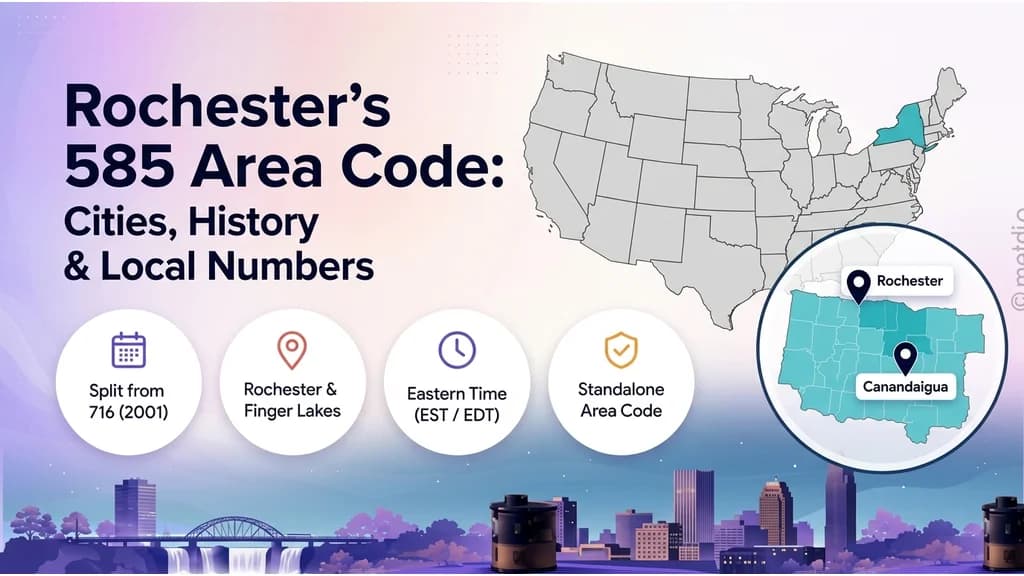
Image source: My Country Mobile
A Brief History of the 716 and 585 Split
Before 2001, the entire Western New York region—from the Pennsylvania border to the shores of Lake Ontario—was served by the 716 area code. However, the explosion of dial-up internet, fax machines, and early cellular phones led to a "number exhaustion" crisis. To solve this, the North American Numbering Plan Administration (NANPA) issued Planning Letter 270, authorizing a geographic split.
The transition followed a specific timeline:
- November 15, 2001: Permissive dialing began. Residents could use either 716 or 585 to reach the Rochester area.
- August 17, 2002: Mandatory dialing took effect. Calls to the Rochester region using the 716 code would no longer connect.
- Wireless Grace Period: Uniquely, wireless customers were given a three-year window to reprogram their equipment, a much longer period than the standard nine months given to landline users.
Current forecasts suggest that the 585 area code will not reach exhaustion until at least 2029. This means residents likely won't have to worry about a new overlay code (where two codes serve the same area) for several more years.
Frequently Asked Questions
- Is 585 a toll-free number?
- No, 585 is a geographic area code for Western New York. Toll-free numbers typically begin with 800, 888, 877, 866, 855, 844, or 833. Calls to a 585 number from outside the local calling area may incur long-distance charges depending on your phone plan.
- Can I still dial 7 digits in Rochester?
- Yes, as of late 2026, 7-digit dialing is still supported for local calls within the 585 area code. This is because the region has not yet implemented an overlay and does not use the 988 prefix for local numbers.
- Does 585 cover Buffalo, NY?
- No, Buffalo remains in the 716 area code. While the two regions are neighbors in Western New York, the 585 code was specifically created to separate the Rochester metropolitan area from the Buffalo metropolitan area.
- Why am I getting so many spam calls from 585 numbers?
- Scammers use "neighbor spoofing" to make their calls appear local. By using a 585 caller ID, they hope you will be more likely to answer. If you receive an unsolicited call from a 585 number that you don't recognize, it is often best to let it go to voicemail.
- What is the current time in the 585 area code?
- The 585 area code is in the Eastern Time Zone. It follows the same time as New York City. During the summer, it is on Eastern Daylight Time (EDT), and during the winter, it is on Eastern Standard Time (EST).
The Bottom Line
The 585 area code is more than just a set of digits; it is a vital link to the economic and cultural heart of the Finger Lakes and Rochester region. Whether you are a resident enjoying the rare convenience of 7-digit dialing or a business owner looking to tap into a $67k median income market, understanding this code is essential.
- Primary Location: Serves Rochester, NY, and eight surrounding counties.
- Dialing Rules: One of the few U.S. codes still allowing 7-digit local dialing.
- Time Zone: Operates on Eastern Time (UTC-5/UTC-4).
- Scam Prevention: Be wary of "Wrong Number" texts that attempt to move you to WhatsApp.
- Business Value: A 585 number provides a local presence in a high-tech, dual-income market.
- History: Split from the 716 area code in 2001 to handle regional growth.
To protect yourself from ongoing telemarketing fraud, consider reporting suspicious 585 calls to the FTC at reportfraud.ftc.gov.