Where Are the Best Places to Swim with Turtles in the World?
Finding the ideal location to swim with sea turtles depends heavily on your snorkeling experience and travel budget. Based on global marine data and traveler consensus, here is a quick breakdown of top-rated options:
- For Beginners & Families: Akumal Bay (Mexico) and Playa Piskado (Curaçao) offer shallow, calm waters with near-guaranteed sightings just steps from the shore.
- For Pristine Visibility: The Similan Islands (Thailand) enforce strict no-stay policies, resulting in exceptionally clear waters.
- For Biodiversity: The Great Barrier Reef (Australia) and the Galapagos Islands (Ecuador) provide opportunities to see multiple species, including rare subspecies, alongside diverse marine life.
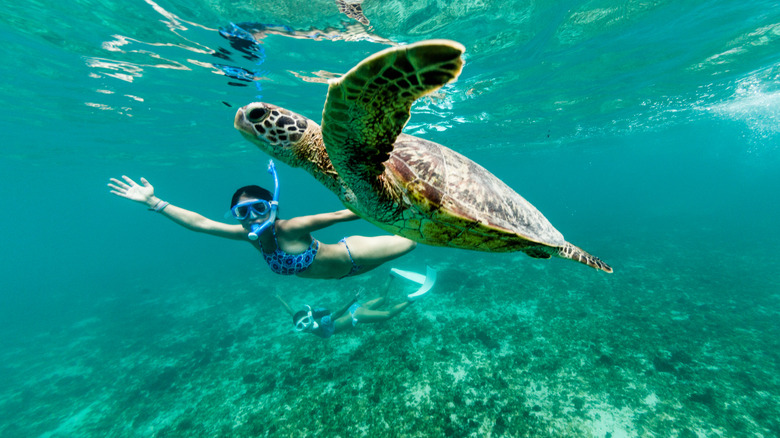
Image source: Islands
Planning a trip to swim with sea turtles requires more than just booking a flight to a tropical island. While these ancient mariners inhabit oceans across the globe, their presence in specific bays and reefs is dictated by complex biological needs, seasonal nesting habits, and local environmental protections.
To maximize your chances of a memorable and ethical encounter, you need to understand where they gather, why they gather there, and when the water conditions are optimal for visibility. This guide breaks down highly rated global destinations, offering practical insights into seasonality, costs, and responsible wildlife interaction.
Why Do Turtles Gather in Specific Underwater Locations?
Sea turtles do not wander the ocean aimlessly. When you find a high concentration of turtles in a specific bay or reef system, it is usually due to one of several distinct environmental factors. Understanding these factors can help you spot turtles even when they aren't surfacing for air.
The Cleaning Station Phenomenon
One of the most fascinating reasons turtles congregate in specific reef areas is the presence of "cleaning stations." These are essentially underwater day spas. In places like Oahu, Hawaii, specific coral outcroppings serve as gathering points where Hawaiian surgeonfish and wrasses wait to nibble algae, parasites, and dead skin off the turtles' shells. According to Living Ocean Tours, if you spot a dense cluster of small yellow surgeonfish hovering around a specific rock, there is a high probability a turtle is resting nearby, waiting to be cleaned.
The Food Source Factor
Different species of turtles seek out different habitats based on their diet. Green sea turtles are primarily herbivores; therefore, they are most frequently found in shallow bays with expansive seagrass beds (such as Akumal, Mexico). Hawksbill turtles, on the other hand, have a specialized diet consisting largely of sea sponges. Because sponges grow on coral, you are much more likely to encounter a Hawksbill while diving along a vibrant, deep-water coral reef.
The Fisherman Hack
In some locations, human activity has inadvertently created reliable turtle gathering spots. A prime example is Playa Piskado in Curaçao. Local fishermen use this pier to clean their daily catch, tossing the scraps back into the water. Over time, the local turtle population has learned that this pier provides a reliable, effortless food source, resulting in a high density of turtles in a very small, easily accessible area.
The Shark Versus Turtle Trade-off
When snorkeling in massive ecosystems like the Great Barrier Reef, managing expectations is key. Travel analysts note an interesting dynamic: you will rarely see high concentrations of sea turtles and reef sharks in the exact same section of a reef. If your boat drops you in an area teeming with reef sharks, you may need to swim toward shallower, seagrass-heavy areas to find the turtles, as they naturally avoid areas with high predator activity.
The Global Seasonality Calendar for Turtle Encounters
Timing is everything when planning a marine wildlife trip. While turtles live in many of these destinations year-round, factors like monsoon seasons, water clarity, and nesting restrictions can drastically impact your experience. For instance, "hatching season" might sound appealing, but it often means local authorities restrict beach access to protect the fragile hatchlings.
| Destination | Optimal Visibility Months | Nesting Season | Hatching Season |
|---|---|---|---|
| Galapagos Islands, Ecuador | December – March | December – March | February – May |
| Great Barrier Reef, Australia | May – October (Dry Season) | October – February | December – April |
| Maui, Hawaii | April – October | May – October | June – December |
| Ningaloo Reef, Australia | Year-round | November – January | January – March |
| Maldives | January – April | Rarely occurs here | Rarely occurs here |
Data Note: There is occasionally conflicting information regarding the "best" time to visit the Great Barrier Reef. While Islands.com highlights the reef as a year-round destination for turtles, dive experts generally recommend the May to October window. During these months, the dry season prevents agricultural runoff from clouding the water, offering significantly better underwater visibility.
Top Places to Swim with Turtles in North America and the Caribbean
For travelers based in the United States or Canada, the Caribbean and North American coastlines offer some of the most accessible and budget-friendly options for marine encounters.
-
Akumal, Mexico Beginner Friendly
Located on the Riviera Maya, Akumal literally translates to "Place of the Turtles" in the Mayan language. The bay is protected by a reef, keeping the water calm and shallow. The seafloor is covered in rich seagrass, drawing dozens of Green sea turtles daily. Because of its fame, Akumal can become incredibly crowded. To experience the bay at its clearest and avoid the massive tour buses arriving from Cancún, plan to enter the water before 9:00 AM. -
Maui and Oahu, Hawaii Moderate
Hawaii is famous for its population of Green sea turtles, known locally as Honu. Unlike turtles in most other parts of the world, Hawaiian Honu exhibit a unique behavior: they frequently crawl out of the water to bask in the sun on sandy beaches. Laniakea Beach on Oahu is famous for this, though traffic and crowds make it notoriously difficult to navigate. For swimming, the waters off Maui (such as Turtle Town) offer excellent boat-access snorkeling. Remember that in Hawaiian culture, turtles are considered ‘aumākua (ancestral guardians) and are treated with deep reverence. -
Playa Piskado, Curaçao Beginner Friendly
Also known as Playa Grandi, this small beach on the northwestern tip of Curaçao is a reliable local secret. Because local fishermen clean their catch on the pier, turtles gather here in large numbers. This is a premier spot for a DIY shore snorkel; there is no need to book an expensive boat tour when you can simply walk into the water from the beach and see turtles within minutes.
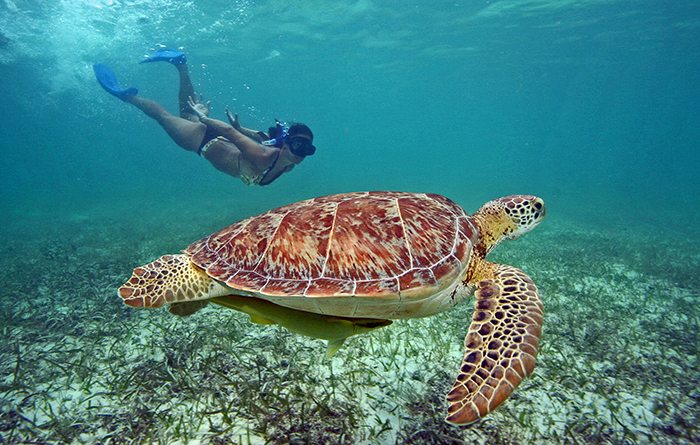
Image source: UltraVilla
Top Destinations for Turtle Snorkeling in Australia and Oceania
Australia boasts some of the most expansive and biodiverse reef systems on the planet, making it a top-tier option for serious snorkelers and divers.
The Great Barrier Reef in Australia
Stretching over 1,400 miles, the Great Barrier Reef is home to six of the world's seven sea turtle species, with Green and Hawksbill turtles being the most commonly sighted. The sheer scale of the reef means that booking a reputable boat tour is mandatory. While turtles are present year-round, visiting between May and October ensures you avoid the region's cyclone season and deadly box jellyfish blooms, while also enjoying the clearest water conditions.
Ningaloo Reef in Western Australia
While the Great Barrier Reef gets most of the international attention, Ningaloo Reef offers a remarkably different experience. It is the world's longest near-shore reef, meaning in many places, you can simply step off the beach and start snorkeling. However, logistics can be challenging. Ningaloo is remote—often requiring a 13-hour drive from Perth through desolate stretches of Western Australia. Because of the isolation and occasional strong currents, many solo travelers opt for guided tours rather than attempting a DIY road trip.
Highly Rated Places to Swim with Turtles in Asia and Africa
For those willing to travel further afield, the waters of Asia and Africa offer unique encounters, often combining turtle sightings with other rare marine megafauna.
-
Sipadan Island, Borneo (Malaysia) Advanced
Sipadan is legendary among divers. The island features a famous "Turtle Tomb"—an underwater cave system where disoriented turtles have historically perished—but the living population is thriving. The island operates an active hatchery to protect eggs from poachers. To preserve the fragile ecosystem, the Malaysian government strictly limits access to just 176 permits per day. You must book months in advance to secure a spot. -
Similan Islands, Thailand Moderate
Located in the Andaman Sea, the Similan Islands are a protected National Park. Unlike the heavily developed Phi Phi Islands, the Similans enforce a strict "no-stay" policy; tourists cannot sleep on the islands. This regulation has kept the waters exceptionally pristine, offering some of the highest visibility in Southeast Asia for spotting foraging turtles. -
Marsa Alam, Egypt Moderate
The Red Sea coast of Egypt is renowned for its clear waters and vibrant coral. Marsa Alam, specifically Abu Dabbab Bay, is a major draw because it offers the rare opportunity to see Green sea turtles sharing the seagrass beds with the elusive dugong (a marine mammal closely related to the manatee).
The Galapagos Islands Subspecies Experience
The Galapagos Islands in Ecuador offer an experience that few alternatives compare to, largely due to the region's intense isolation and unique evolutionary history. According to PADI's dive experts, this is the only place on earth where you can swim with the Galapagos Green Sea Turtle, a distinct subspecies.
For travelers interested in citizen science, you can identify this specific subspecies by looking closely at its head: they feature a uniquely serrated lower jaw and only a single pair of scales located directly above their eyes. Quinta Playa on Isabela Island is widely regarded as one of the most active nesting sites in the archipelago, making the surrounding waters a highly reliable spot for encounters between December and March.
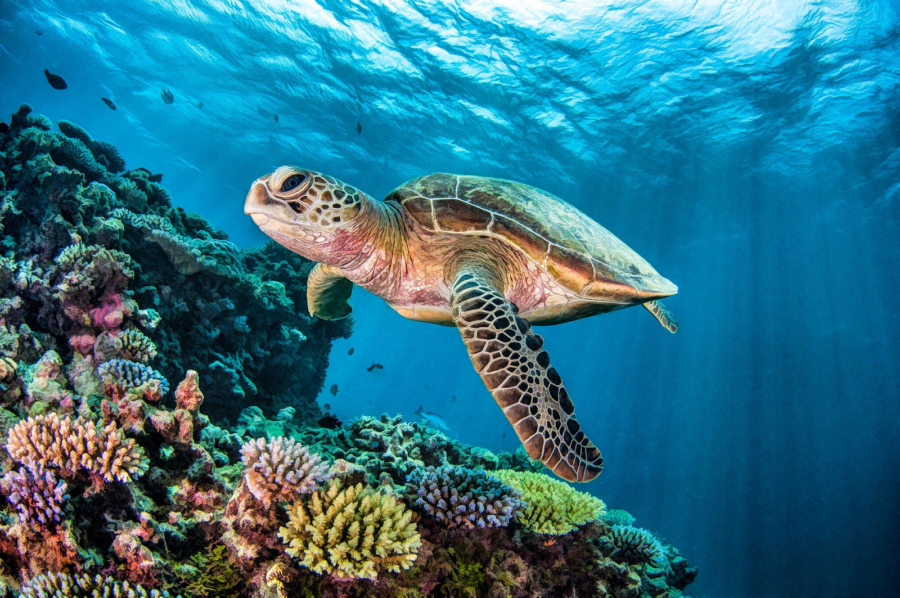
Image source: Oceanic Worldwide
Should You Book a Guided Tour or Go Independently?
One of the biggest decisions when planning a turtle snorkeling trip is whether to pay for a guided boat tour or attempt a DIY shore excursion. The right choice depends entirely on the geography of your chosen destination.
| Approach | Estimated Cost | Best Suited Destinations | Pros & Cons |
|---|---|---|---|
| DIY Shore Snorkel | $0 - $25 (Gear rental) | Akumal (Mexico), Playa Piskado (Curaçao), Laniakea (Hawaii) | Pros: Budget-friendly, flexible timing. Cons: Must navigate crowds and parking independently; limited to shallow bays. |
| Guided Boat Tour | $80 - $250+ per person | Great Barrier Reef (Australia), Galapagos (Ecuador), Sipadan (Borneo) | Pros: Access to deeper, clearer reefs; expert guides spot wildlife faster; safety in strong currents. Cons: Expensive; strict schedules; prone to seasickness. |
If you are visiting a location with strong offshore currents or complex reef structures, a guided tour is highly recommended for safety. Guides also understand the local regulations and can ensure you do not accidentally violate marine protection laws.
How to Identify Sea Turtle Species Like a Pro
Elevate your snorkeling experience from simple sightseeing to marine biology by learning to identify the turtles you encounter. While there are seven species globally, casual snorkelers are most likely to see these three:
- Green Sea Turtle: The most common species you will encounter. Despite the name, their shells are usually brown or olive. They have a smooth, un-serrated shell edge and a rounded, blunt snout suited for grazing on seagrass.
- Hawksbill Turtle: Easily identified by their sharp, bird-like beak (used for extracting sponges from coral crevices) and the beautiful, overlapping plates on their shell. They are typically found in deeper coral reef environments.
- Leatherback Turtle: A rare find for snorkelers, as they prefer deep, open ocean waters. They are massive (growing up to 7 feet long) and lack a hard, bony shell, featuring a dark, rubbery, ridged carapace instead.
How to Swim with Turtles Responsibly and Legally
Sea turtles are wild animals, and six of the seven species are classified as threatened or endangered. Irresponsible tourism can cause them immense stress, disrupt their feeding, and even lead to legal trouble for the traveler.
The 20-Foot Rule and Vertical Space
Marine biologists universally recommend maintaining a distance of at least 10 to 20 feet from any sea turtle. When observing them, never approach from the side or from behind, which can startle them. Approach slowly from the front so the turtle can see you and choose its own path.
Crucially, you must never swim directly above a sea turtle. Turtles are reptiles; they must surface to breathe air. If a snorkeler is hovering directly over them, the turtle may panic and drown, fearing a predator is blocking its path to oxygen.
Legal Warning: In many jurisdictions, touching or harassing a sea turtle is a serious crime. In Hawaii, for example, pursuing, touching, or riding a Honu is a violation of both state law and the federal Endangered Species Act, carrying heavy fines. Always keep your hands to yourself.
Reef-Safe Sunscreen
Chemicals found in standard sunscreens, particularly oxybenzone and octinoxate, are highly toxic to coral reefs and marine life. In destinations like Hawaii and parts of Mexico, the use of non-mineral sunscreen is legally banned. Always pack a zinc-based, reef-safe sunscreen, or better yet, wear a long-sleeved UV rash guard to minimize the need for sunscreen entirely.
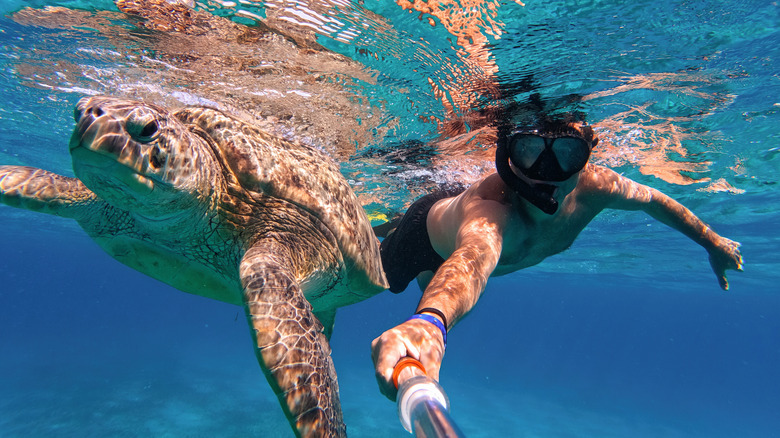
Image source: Islands
Frequently Asked Questions
What is the best month to swim with sea turtles?
The ideal timing depends entirely on the hemisphere. For Northern Hemisphere destinations like Hawaii and Mexico, the April to October window generally offers the calmest waters and best visibility. For Southern Hemisphere spots like the Great Barrier Reef, the dry season from May to October is optimal. Always check the specific seasonality of your chosen destination before booking.
Can you touch a sea turtle while swimming?
No, you should never touch a sea turtle. Touching them can remove the protective mucus layer on their shell, exposing them to harmful bacteria and infections. Furthermore, touching or harassing sea turtles is illegal in most countries and can result in severe financial penalties.
Where can you swim with turtles for free?
If you have your own snorkeling gear, you can swim with turtles for free at public shore-access beaches. Notable locations include Akumal Bay in Mexico (though some areas now require a guide fee, public zones exist), Laniakea Beach in Oahu, Hawaii, and Playa Piskado in Curaçao.
Do you need to be a strong swimmer to snorkel with turtles?
Not necessarily, provided you choose the right location. Shallow, protected bays like Akumal are suitable for beginners and weak swimmers. Additionally, most guided boat tours provide life jackets or flotation noodles. However, if you are visiting open-ocean reefs with strong currents, strong swimming skills are highly recommended.
Which Caribbean island has the highest turtle population?
While populations fluctuate, Barbados (specifically Carlisle Bay) and Curaçao (Playa Piskado) consistently rank among the top Caribbean islands for reliable, high-density turtle sightings. The Bahamas also offer excellent opportunities, particularly around the Abacos and Eleuthera.
Final Thoughts
Swimming alongside a sea turtle in its natural habitat is a remarkable experience, but it requires careful planning and a commitment to responsible tourism. By choosing the right location for your skill level and respecting marine boundaries, you ensure these ancient creatures continue to thrive.
- Check the calendar: Always align your trip with the local dry season to ensure optimal underwater visibility.
- Match your skill level: Beginners should opt for shallow shore-access bays (like Akumal), while advanced snorkelers can tackle remote boat-access reefs (like Sipadan).
- Look for the fish: Spot "cleaning stations" by watching for clusters of small surgeonfish, which often indicate a resting turtle nearby.
- Respect the 20-foot rule: Maintain a safe distance and never swim directly above a turtle, as they need clear access to the surface to breathe.
- Gear up responsibly: Pack a UV rash guard and strictly use mineral-based, reef-safe sunscreen to protect the marine ecosystem.