What Languages Are Spoken in Mexico and How Many Are There?
Mexico is one of the most linguistically diverse nations on the planet. While Spanish is the primary language spoken by over 99% of the population, it is not the "official" language by law. Instead, the Mexican government recognizes 68 indigenous languages as "national languages" with equal legal standing. There is no language called "Mexican"; that term refers to nationality, not a specific tongue.
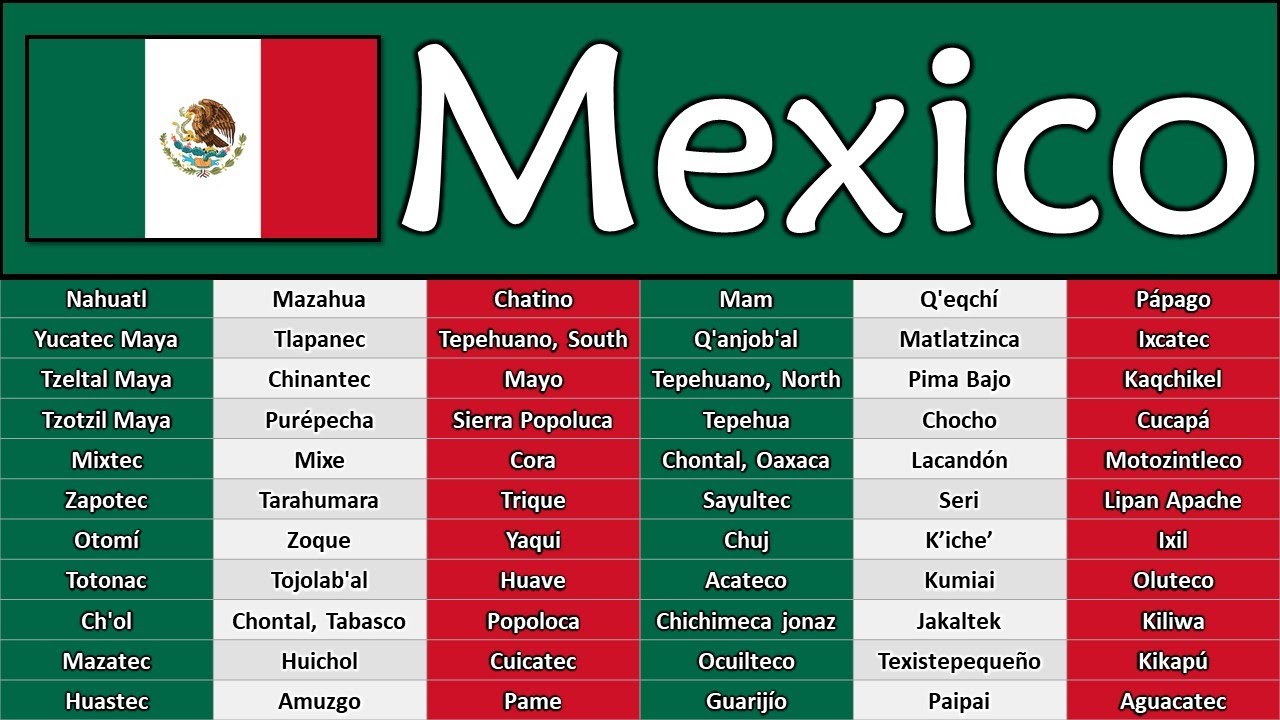
Image source: YouTube
Is Mexican a Language or a Dialect?
A common misconception among travelers and students is the belief that "Mexican" is a language. In reality, "Mexican" is a demonym used to describe a person from Mexico or something related to the country's culture. The primary language spoken in the country is Spanish, which was introduced during the colonial era. However, the Spanish spoken in Mexico has evolved significantly over five centuries, incorporating thousands of words from indigenous tongues like Nahuatl and Maya.
According to IndigenousMexico.org, the distinction between nationality and language is vital for understanding the country's identity. While a person might speak "Mexican Spanish," they are speaking a dialect of the Spanish language, not a separate language called Mexican. This dialect is characterized by unique intonations, slang, and grammatical structures that set it apart from the Spanish spoken in other parts of the world.
Furthermore, Mexico is home to millions of people who speak indigenous languages as their first tongue. For these citizens, Spanish may be a second language or not spoken at all. Therefore, referring to the country's linguistic output simply as "Mexican" ignores the rich tapestry of 68 distinct indigenous groups that have existed since long before the arrival of Europeans.
Does Mexico Have an Official Language?
Surprisingly, Mexico does not have an official language at the federal level. While Spanish is the de facto language used for government, education, and media, the Mexican Constitution does not explicitly name it as the "official" tongue. This is a deliberate legal choice intended to protect the rights of indigenous populations.
The General Law of Linguistic Rights of Indigenous Peoples, enacted in 2003, changed the legal landscape significantly. This law recognizes Spanish and all indigenous languages spoken in the national territory as "national languages." This status grants indigenous speakers the right to access government services, medical care, and legal proceedings in their native tongue. As noted by Spanish55, this legal framework ensures that indigenous languages are not treated as secondary "dialects" but as valid, sovereign languages of the state.
In practice, this means that if you are in a region with a high density of Zapotec speakers, the local government is technically obligated to provide documentation and services in Zapotec. While implementation varies by region, the legal recognition ranks among the most progressive linguistic policies in the Americas.
How Spanish Became the Dominant Tongue in Mexico
The dominance of Spanish in Mexico is the result of centuries of colonial rule and post-independence policies. Following the fall of Tenochtitlan in 1521, the Spanish Crown and Catholic missionaries began a massive effort to spread the Spanish language and religion. However, for the first two centuries of colonial rule, many friars actually learned indigenous languages to facilitate conversion, leading to a period of bilingualism.
The Fall of the Aztec Empire marks the beginning of Spanish linguistic influence in Central Mexico.
King Charles II of Spain issues a decree attempting to ban indigenous languages and mandate Spanish-only education.
Mexican Independence. Spanish remains the language of the elite and the new government administration.
The Law of Linguistic Rights officially recognizes 68 indigenous languages as national languages.
The shift toward total Spanish dominance accelerated in the late 17th century. A 1696 decree by Charles II sought to eliminate indigenous tongues entirely in favor of Spanish. After independence in 1821, the Mexican government continued to promote Spanish as a tool for national unity, often at the expense of indigenous cultures. It wasn't until the late 20th century that the tide began to turn toward preservation and multi-cultural recognition.
How Mexican Spanish Differs from the Spanish Spoken in Spain
While a speaker from Mexico City and a speaker from Madrid can understand each other perfectly, the differences in their versions of Spanish are notable. These differences range from pronunciation (phonology) to vocabulary (lexicon) and even social etiquette.
| Feature | Mexican Spanish | Peninsular Spanish (Spain) |
|---|---|---|
| Second Person Plural | Uses Ustedes exclusively. | Uses Vosotros for informal settings. |
| Pronunciation of 'z' and 'c' | Pronounced as 's' (Seseo). | Pronounced as 'th' (Distinción). |
| Word for "Car" | Carro or Auto. | Coche. |
| Word for "Mobile Phone" | Celular. | Móvil. |
| Slang / Fillers | ¿Mande?, ¡Qué padre! | Vale, Guay. |
One of the most distinct features of Mexican Spanish is the use of Mexicanismos—words derived from indigenous languages. For example, the word for turkey in Mexico is guajolote (from Nahuatl), whereas in Spain, it is pavo. Additionally, Mexican Spanish is often described as having a more "musical" or rhythmic quality compared to the more direct, staccato delivery found in central Spain.
Understanding the 68 National Indigenous Languages
The National Institute of Indigenous Languages (INALI) provides the most comprehensive framework for understanding Mexico's native tongues. They use a three-tiered hierarchy to classify the linguistic diversity of the country. This system helps researchers and the government manage the vast differences between communities.
It is important to note that these are not "dialects" in the sense of being minor variations of one language. A speaker of Yucatec Maya and a speaker of Nahuatl are as linguistically different as a speaker of English and a speaker of Japanese. Even within a single group, such as Zapotec, the variants can be so diverse that speakers from two different valleys in Oaxaca may find it difficult to communicate without using Spanish as a bridge.
Why the Total Number of Languages Varies by Source
If you search for the number of languages in Mexico, you will find conflicting figures. Some sources say 68, while others, like Ethnologue, list as many as 296 living languages. This discrepancy arises from the criteria used to define a "language" versus a "variant."
The Mexican government focuses on the 68 linguistic groups. These groups are based on historical and cultural identity. However, linguists often use the "mutual intelligibility" test. If two groups of people speak in a way that the other cannot understand, linguists classify them as separate languages. Because Mexico's rugged, mountainous geography isolated communities for thousands of years, many "variants" evolved into entirely distinct languages. This is why a linguistic database might count hundreds of languages, while a legal document counts 68 groups.
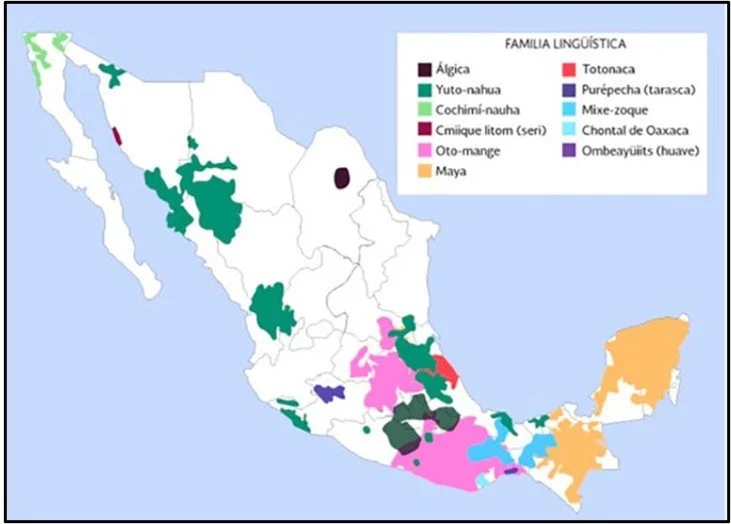
Image source: Indigenous Mexico
Which Indigenous Languages Have the Most Speakers?
Despite the dominance of Spanish, millions of Mexicans continue to speak indigenous languages daily. According to 2020-2026 projections from INEGI, approximately 6.1% of the population (over 7.3 million people) speak an indigenous tongue. Here are the top five most spoken indigenous languages in Mexico:
- Nahuatl (1.7 million speakers): The language of the Aztec Empire, spoken primarily in Central Mexico (Puebla, Veracruz, Hidalgo). It has had the most significant impact on Mexican Spanish and even English.
- Yucatec Maya (800,000 speakers): Spoken throughout the Yucatán Peninsula. It is famous for its unique "glottalized" sounds and is one of the few indigenous languages with a robust written literature dating back centuries.
- Tzotzil (550,000 speakers): A Mayan language spoken in the highlands of Chiapas. It has seen a steady increase in speakers in recent years.
- Mixtec (530,000 speakers): Primarily spoken in the "La Mixteca" region, which spans parts of Oaxaca, Puebla, and Guerrero.
- Zapotec (490,000 speakers): Concentrated in the state of Oaxaca, this language family is known for its extreme internal diversity.
While Nahuatl remains the most widely spoken, Yucatec Maya is often considered to have the highest "vitality" in certain regions, where it is used in local media, signage, and community commerce. Data from uTalk suggests that while some languages are declining, others are holding steady or growing due to cultural pride and bilingual education initiatives.
Where Are These Languages Spoken in Mexico?
Linguistic diversity in Mexico is not evenly distributed. If you travel to the north, you will find fewer indigenous speakers, as these regions were more sparsely populated before the conquest and saw more intensive European settlement. However, as you move south, the linguistic density increases dramatically.
Oaxaca stands out as a top choice for linguistic researchers, as it is the most diverse state in the country. It is home to 15 of the 68 linguistic groups and over 150 variants. The rugged Sierra Madre mountains acted as a natural barrier, allowing distinct languages to flourish in isolation for millennia. The Yucatán Peninsula is another stronghold, where Mayan is spoken not just in rural villages but also in major cities like Mérida and Valladolid.
In Central Mexico, Nahuatl remains prevalent in the states surrounding Mexico City. Even in the capital itself, you can often hear indigenous languages spoken by migrants from other states who have brought their native tongues to the metropolis.
How Much English Is Actually Spoken in Mexico?
For travelers, the question of English prevalence is often a priority. Statistically, only about 5% of the Mexican population is proficient in English. However, this number is misleading because English speakers are concentrated in specific "hubs."
In border cities like Tijuana or Ciudad Juárez, English is common due to the constant cross-border flow of people and trade. In Mexico City, English is the language of business and high-level academia. However, a study by UNAM (National Autonomous University of Mexico) highlights an "Academic Barrier," where a lack of English proficiency limits many Mexican researchers and students from accessing global scientific literature. While the government has attempted to mandate English in public schools, the results have been inconsistent due to a shortage of qualified teachers.
Other Foreign and Immigrant Languages in Mexico
Beyond Spanish and indigenous tongues, Mexico is home to several fascinating immigrant linguistic enclaves. These communities have preserved their ancestral languages for generations, creating unique cultural pockets.
- Plautdietsch (Low German): Spoken by Mennonite communities in Chihuahua and Durango. There are an estimated 80,000 speakers of this archaic German dialect.
- Venetian (Chipilo): In the town of Chipilo, Puebla, descendants of Italian immigrants still speak a 19th-century Venetian dialect that has largely disappeared in Italy itself.
- Arabic and Chinese: Significant immigrant populations in Mexico City and Mexicali have maintained their native languages, contributing to the urban linguistic mix.
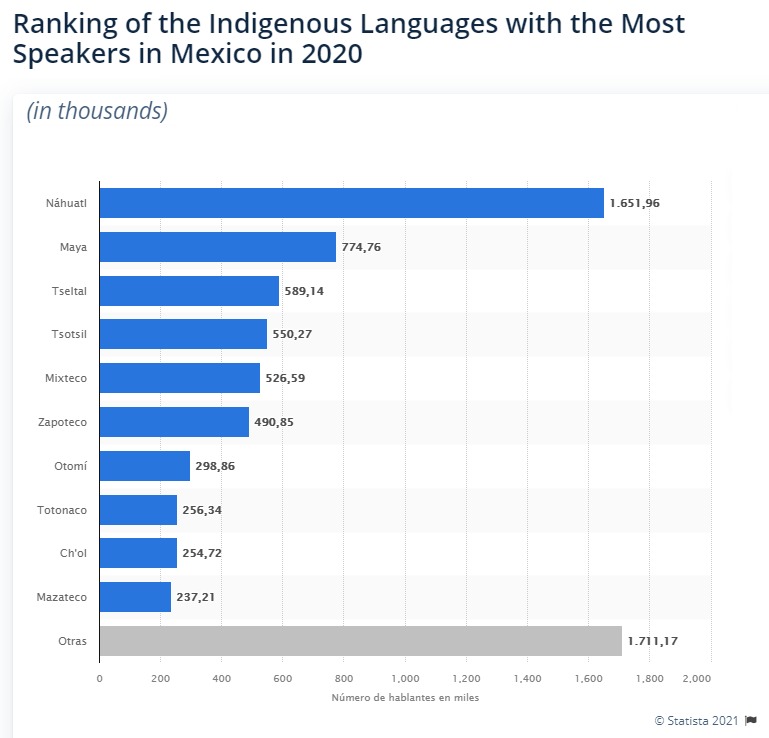
Image source: PickWriters
Nahuatl Words You Use Every Day in English
The influence of Mexican languages extends far beyond the country's borders. Because the Spanish conquistadors encountered many plants and animals in Mexico that did not exist in Europe, they adopted the local Nahuatl names. These words eventually made their way into English.
Common English words with Nahuatl roots include:
- Avocado: From ahuacatl (which also meant "testicle" due to the fruit's shape).
- Chocolate: From xocolatl (bitter water).
- Tomato: From tomatl.
- Coyote: From coyotl.
- Chicle (Gum): From tzictli.
- Axolotl: From axolotl (water monster).
This "reverse-flow" of language shows that while Spanish became the dominant tongue, indigenous languages fundamentally reshaped how the entire world speaks about food and nature.
What Rights Do Indigenous Speakers Have Today?
The 2003 Law of Linguistic Rights was a significant advancement, but how does it work in practice? Under Mexican law, indigenous citizens have the right to be tried in their own language with the assistance of a professional interpreter. They also have the right to receive basic education in their mother tongue.
The government established INALI to oversee these rights and promote the use of indigenous languages in public life. This includes the production of radio programs, books, and digital content in native tongues. However, challenges remain. Many indigenous speakers still face discrimination, and the "Academic Barrier" mentioned earlier often forces students to abandon their native language in favor of Spanish to succeed in higher education.
Why Many Mexican Languages Are at Risk of Disappearing
Despite legal protections, many of Mexico's 364 linguistic variants are in danger of extinction. Linguists use a "Vitality Scale" to measure the health of a language. While Nahuatl and Maya are considered "Institutional" (stable), dozens of other variants are "Critically Endangered."
In some cases, a linguistic variant may have fewer than 100 speakers left, most of whom are elderly. When these individuals pass away, the unique grammar, oral history, and ecological knowledge contained within that language are lost forever. Factors contributing to this decline include migration to cities, the influence of mass media in Spanish, and historical social stigmas associated with speaking "dialects." Current efforts by INALI and various NGOs focus on digitizing these languages and creating "linguistic nests" where elders teach children the language in an immersive environment.
Key Takeaways: Mexico's Linguistic Diversity
Mexico's linguistic landscape is a complex blend of colonial history and ancient heritage. Understanding these key points provides a clearer picture of the nation's identity:
- Spanish is the primary tongue but is not the "official" language of Mexico by constitutional law.
- 68 indigenous language groups are recognized as national languages with equal legal validity.
- Nahuatl and Yucatec Maya are the most widely spoken native languages, with millions of active speakers.
- Oaxaca is the epicenter of diversity, housing hundreds of linguistic variants in its mountainous terrain.
- English proficiency is low (around 5%) and is mostly limited to tourist zones, border cities, and business sectors.
- Many native tongues are endangered, leading to urgent modern efforts for digital preservation and education.
- English contains many Nahuatl loanwords, including "chocolate," "tomato," and "avocado."
For your next trip or research project, remember that learning even a few basic phrases in a local indigenous tongue can open doors to a much deeper cultural experience in Mexico.
Frequently Asked Questions
No, Mexico does not have an official language at the federal level. Spanish is the de facto national language, but the 2003 Law of Linguistic Rights recognizes 68 indigenous languages as having the same legal status as Spanish.
Approximately 5% of the Mexican population is proficient in English. While English is common in tourist areas like Cancun and along the U.S. border, it is rarely spoken in rural communities or smaller inland cities.
Nahuatl is the most spoken indigenous language, with roughly 1.7 million speakers. It was the language of the Aztec Empire and remains a vital part of the culture in Central Mexico.
No, "Mexican" is not a language. People in Mexico speak Spanish (specifically the Mexican dialect) and 68 different indigenous languages. "Mexican" refers to a person's nationality.
Yes, Yucatec Maya is a very active living language spoken by nearly 800,000 people, primarily in the Yucatán Peninsula. It is used in daily life, local commerce, and even some regional media.
Oaxaca's diversity is largely due to its geography. The state's rugged mountains and deep valleys isolated different ethnic groups for centuries, allowing their languages to evolve independently into hundreds of distinct variants.