The Most Important Apartment Essentials Products You Need to Buy Before Move-In Day
When shopping for apartment essentials products, prioritize survival over decor for your first week. The absolute non-negotiables you must secure before move-in day include:
- Bathroom Basics: Toilet paper, hand soap, and a shower curtain with rings (most apartments do not provide the rod or rings).
- Sleep Setup: A new mattress, clean sheets, and window treatments for immediate privacy.
- Maintenance Kit: A basic tool set (screwdriver/pliers), a flashlight, and a first aid kit.
- Cleaning Supplies: A quality vacuum, trash bags, and an all-purpose cleaner.
Pack these items in a "Night One" carry-on suitcase so they are immediately accessible without digging through taped cardboard boxes.
The Reality of Furnishing Your First Apartment
Moving into a new space is inherently overwhelming. If you search online for an apartment shopping list, you will likely be bombarded with bloated, 150-item checklists that treat a decorative throw pillow with the same urgency as a plunger. This lack of prioritization leads to decision fatigue and blown budgets before you even sign the lease.
The reality of furnishing your first apartment requires a strict filter: distinguishing between "survival items" and "comfort items." According to community consensus on renter forums, the biggest mistake first-time movers make is buying everything at once. You do not need a fully stocked spice rack or a matching set of aesthetic storage bins on day one. You need a place to sleep, a way to clean yourself, and a method to secure your privacy.
By focusing strictly on the apartment essentials products that facilitate daily living, you can spread out your purchases, wait for seasonal sales on larger furniture pieces, and actually understand how you use your space before filling it with unnecessary clutter.
How Much Should You Budget for Your First Apartment Essentials?
Before adding a single item to your cart, you need a financial framework. Without one, it is incredibly easy to spend thousands of dollars on minor decor while neglecting foundational furniture. Financial experts and moving professionals often recommend the 10-15% Rule.
The 10-15% Rule Explained
According to budgeting guidelines from Extra Space Storage, you should budget roughly 10% to 15% of your annual income to fully furnish a first apartment from scratch. If you make $50,000 a year, your total furnishing budget should sit between $5,000 and $7,500. To prevent overspending in the wrong categories, this budget should be distributed using the 50/20/15/15 framework:
The $375 Kitchen Baseline
The kitchen is notoriously the most expensive room to stock with small items. Data compiled by Anna Saxton's essential checklists indicates that outfitting a basic, functional kitchen with new items (excluding the dining table and chairs) costs approximately $375. This baseline covers a starter set of pots and pans, basic utensils, plates, bowls, a coffee maker, and a trash can. If you add a budget-friendly dining set, that number quickly jumps to $500. Knowing these benchmarks helps you identify when a "sale" is actually a good deal and when you are overpaying for basic utility.
The Night One Survival Kit You Should Pack in a Suitcase
The most chaotic part of moving is the first 24 hours. You are exhausted, the apartment is full of identical brown boxes, and you desperately need a shower and a phone charger. This is where the "Vacation Suitcase" strategy becomes your most valuable asset.
The Vacation Suitcase Strategy
Instead of packing a "first-night box" that inevitably gets buried under heavier boxes in the moving truck, pack a carry-on suitcase exactly as if you were going on a three-day vacation. This ensures your most critical apartment essentials products are mobile, easily identifiable, and stay with you in your personal vehicle.
Your suitcase should include:
- Three days of comfortable clothing and pajamas.
- Essential toiletries (toothbrush, toothpaste, deodorant, shampoo).
- One complete set of bath towels.
- Phone chargers and a portable power bank.
- Basic medications (pain relievers, allergy meds, prescriptions).
- Important leasing documents and identification.
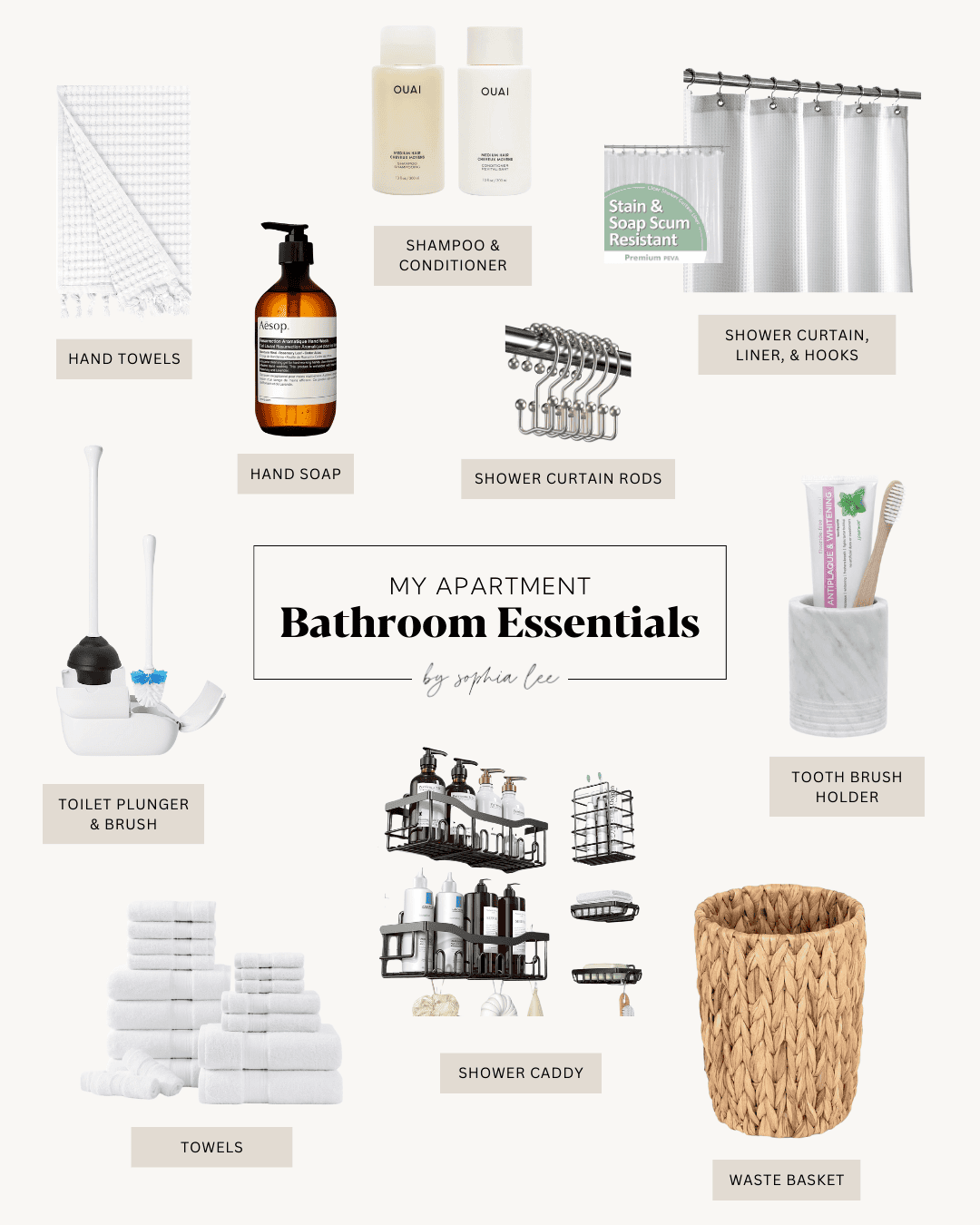
Image source: By Sophia Lee
The Privacy Priority
One of the most frequently forgotten move-in day essentials is window treatments. According to Updater's moving guides, many modern apartments do not come with pre-installed blinds or curtains. If you wait until after you move in to measure and buy curtains, you will spend your first few nights completely exposed to neighbors and streetlights. Buy inexpensive, temporary paper blinds or tension rods and blackout curtains *before* you hand over your first month's rent.
Kitchen Essentials That Are Built to Last
When buying kitchen supplies, the temptation is to buy the cheapest 50-piece "kitchen in a box" set available. However, these sets are often filled with flimsy plastic tools that melt, warp, or break within months. Strategic investments here will save you significant money over your leasing term.
The Stamped Quality Rule
When purchasing measuring cups and spoons, apply the "stamped rule." Only buy metal measuring tools where the measurements (e.g., "1 Cup" or "1 Tbsp") are physically stamped or engraved into the metal. Avoid plastic or metal tools with painted-on measurements. After a few months of hot water and dishwasher cycles, the paint will inevitably peel off, leaving you with useless, unidentifiable scoops.
Space-Saving Cookware Logic
Apartment kitchens are notorious for lacking cabinet space. To maximize your storage, prioritize "nesting sets" for mixing bowls and food storage containers. Furthermore, consider investing in cookware with removable handles. These innovative pots and pans stack perfectly flat inside one another, freeing up massive amounts of vertical cabinet space compared to traditional long-handled skillets.
The Flour Sack Hack
Do not waste your budget on expensive, decorative kitchen towels that push water around rather than absorbing it. Experienced renters swear by the "flour sack hack." You can buy a bulk pack of 100% cotton flour sack towels for a fraction of the cost of decorative towels. They are highly absorbent, dry incredibly fast (preventing mildew smells), and are cheap enough that you won't panic if they get stained with tomato sauce.
Investment Pieces: Cast Iron vs. Cheap Non-Stick
While you can save money on spatulas and towels, you should invest slightly more in your primary cooking vessels. A heavy-duty cast iron skillet or an enameled Dutch oven is a lifetime purchase. Cheap non-stick pans warp under high heat and their coating inevitably scratches, requiring replacement every year or two.
| Feature | Cheap Non-Stick Pan ($20) | Cast Iron Skillet ($40) |
|---|---|---|
| Lifespan | 1 to 2 years (coating degrades) | Generations (lasts a lifetime) |
| Heat Retention | Poor (cools quickly when food is added) | Excellent (perfect for searing) |
| Oven Safe | Rarely (handles melt) | Yes (up to 500°F+) |
| Cost Per 10 Years | $100 - $200 (replaced 5-10 times) | $40 (one-time purchase) |
Bathroom and Cleaning Products You Need on Day One
Your bathroom and cleaning supplies are the frontline defense against losing your security deposit. Having the right tools immediately available ensures you can maintain the space from the moment you unpack.
The Anti-Cross-Contamination Rule
When buying cleaning supplies, implement a strict anti-cross-contamination system. Home maintenance experts highly recommend buying color-coded scrub brushes or sponges. For example, use a blue brush exclusively for the bathroom sink and shower, and a yellow sponge exclusively for the kitchen. Never let the tools used near the toilet touch the surfaces where you prepare food or wash your face.
Consumables by the Numbers
It is difficult to gauge how many consumable products to buy for a new place. According to June Homes' move-in data, a single person should start with 4 to 6 rolls of toilet paper and a 6-pack of paper towels. This quantity is enough to comfortably last the first two weeks of heavy move-in cleaning and daily use without taking up excessive storage space.
The Trash Can Tier System
Trash cans are surprisingly expensive, but buying the wrong size leads to constant frustration. Implement a tier system: purchase a standard 13-gallon step-can with a lid for the kitchen to contain food odors. For the bathroom and bedroom, purchase smaller 2-to-3-gallon open bins. Buying standard sizes ensures you can easily find compatible trash bags at any grocery store.
The Vacuum Investment
If your apartment has any carpeting, a vacuum is not a luxury; it is a necessity. While it is tempting to buy a $20 lightweight stick vacuum, these models lack the suction power to pull dirt from carpet padding and their motors frequently burn out within six months. Investing $100 to $150 in a high-quality upright vacuum from a reputable brand will save you from buying five cheap vacuums over the course of your lease.
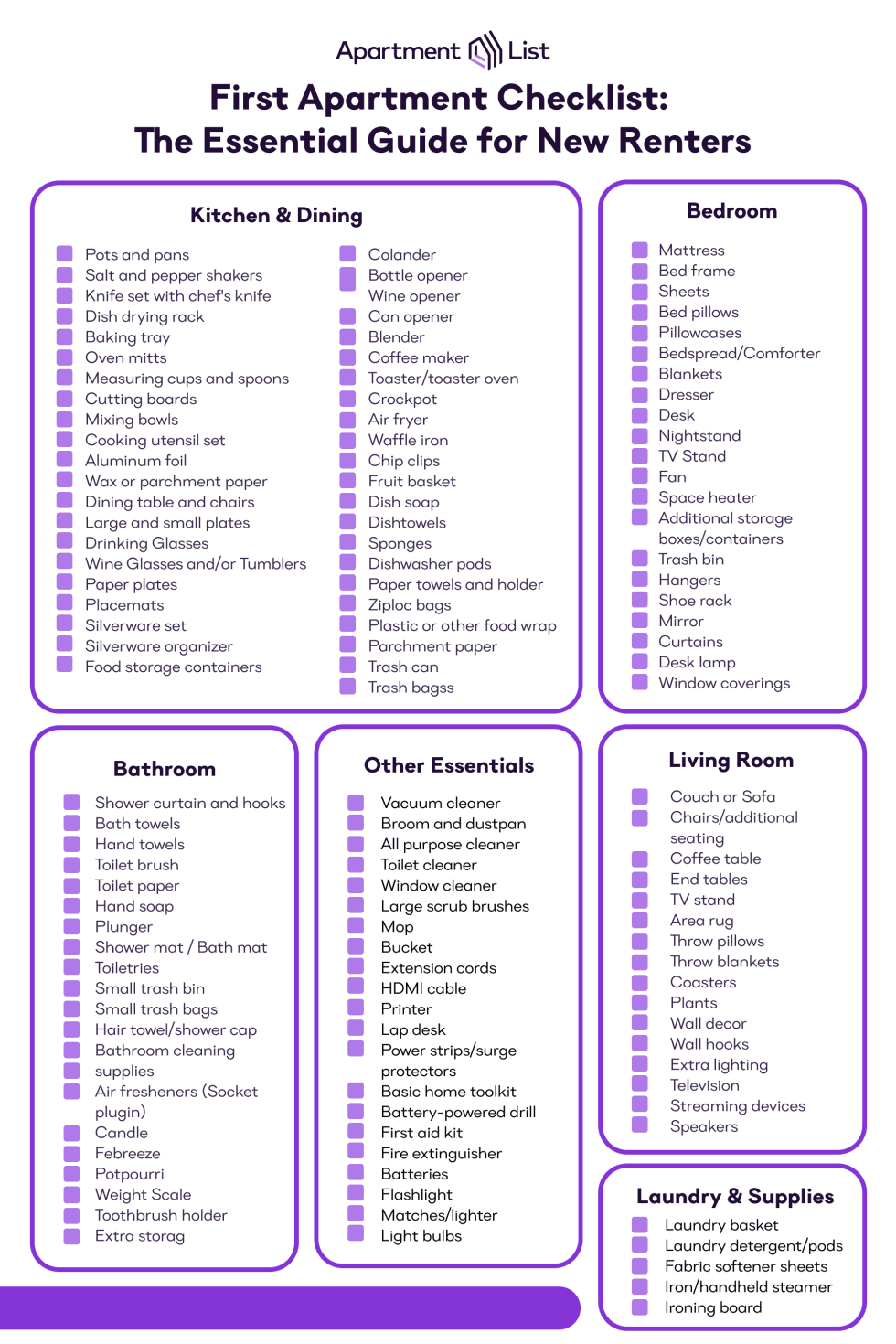
Image source: Apartment List
Bedroom Essentials for Better Sleep and Storage
Your bedroom should be your sanctuary, especially during the stressful transition of moving. While you might want a beautiful headboard and matching nightstands, your initial focus must be on sleep quality and clothing organization.
The Mattress vs. Frame Debate
When allocating your bedroom budget, prioritize the mattress over the bed frame. Renter resources occasionally suggest buying used mattresses to save money, but health and hygiene experts strongly advise against this due to the risk of bedbugs, dust mites, and degraded support. Always buy a new mattress. Conversely, a bed frame is essentially just metal or wood holding up your mattress. You can easily source a high-quality, gently used bed frame on Facebook Marketplace or at a thrift store, saving yourself hundreds of dollars that can be redirected toward a better mattress.
Hanger Uniformity
Closet space is a premium commodity in apartments. Do not bring a mismatched collection of thick plastic and wire hangers from your childhood home. Instead, buy one large bulk pack of slim, velvet hangers. Velvet hangers prevent clothes from slipping off, and their ultra-thin profile can increase your usable closet space by up to 30% compared to bulky plastic alternatives.
Maintenance and Safety Items Most Renters Forget
Renters often assume that because they have a landlord, they do not need tools or maintenance supplies. This is a critical error. While your landlord is responsible for major repairs, you are responsible for day-to-day upkeep and immediate emergencies.
The Basic Tool Kit
You need a basic tool kit on day one. At a minimum, this should include a multi-bit screwdriver, a hammer, a tape measure, and a pair of pliers. You will need these immediately to assemble flat-pack furniture, tighten loose cabinet knobs, open battery compartments, and measure spaces for rugs or shelving.
Emergency Prep
Do not rely solely on your smartphone's flashlight during a power outage; it drains your battery when you might need to make an emergency call. Purchase a dedicated, battery-operated LED flashlight and keep it in an easily accessible drawer. Additionally, a basic first aid kit containing bandages, antiseptic wipes, and burn cream is essential. Moving involves heavy lifting, box cutters, and unfamiliar kitchens—minor injuries are incredibly common during the first week.
Where to Shop for Apartment Essentials to Save Money
Knowing what to buy is only half the battle; knowing *where* to buy it determines whether you stay within your 10-15% budget.
The Costco Bulk List
Wholesale clubs like Costco or Sam's Club are invaluable for first-time movers. Use these stores to buy your initial bulk supplies: toilet paper, paper towels, trash bags, laundry detergent, and all-purpose cleaners. Buying these in bulk upfront prevents the "death by a thousand cuts" phenomenon where you spend $15 every three days at the local convenience store for basic supplies.
The "Second-Hand First" Rule
Adopt a "second-hand first" mentality for hard furniture. Items like solid wood dining tables, coffee tables, desks, and bookshelves depreciate rapidly in value. Before buying these items new from a big-box store, check Facebook Marketplace, OfferUp, or local estate sales. You can frequently find high-quality, solid wood pieces for less than the cost of new particleboard furniture.
Frequently Asked Questions
Final Thoughts
Furnishing your first apartment doesn't have to drain your savings or leave you overwhelmed with boxes. By prioritizing survival over aesthetics during your first week, you can make smarter, more deliberate purchasing decisions.
- Pack a "Night One" suitcase with three days of clothes, toiletries, and chargers so you aren't digging through boxes when you're exhausted.
- Apply the 10-15% budget formula to your annual income, allocating 50% to furniture and 20% to kitchen supplies to prevent overspending on decor.
- Check for window treatments and shower rods before move-in day to ensure you have immediate privacy and the ability to bathe.
- Prioritize stamped metal measuring tools and nesting cookware to maximize durability and save limited cabinet space.
- Invest in a quality vacuum and a new mattress, but use Facebook Marketplace to source solid wood furniture and bed frames at a steep discount.
Review your current shopping list today and cross off any decorative items until you have secured your absolute survival essentials.