Ribeye vs. Striploin — Which Premium Steak Should You Actually Buy?
Choosing between a ribeye and a striploin (New York Strip) depends entirely on your preference for fat and texture. A ribeye is widely regarded as one of the most flavorful cuts due to its high intramuscular marbling and the presence of the buttery "cap" muscle. In contrast, a striploin offers a leaner, more consistent "meaty" bite with a distinct fat cap along the edge. If you prioritize richness, go for the ribeye; if you prefer a firm, traditional steak texture, the striploin ranks among the top choices.
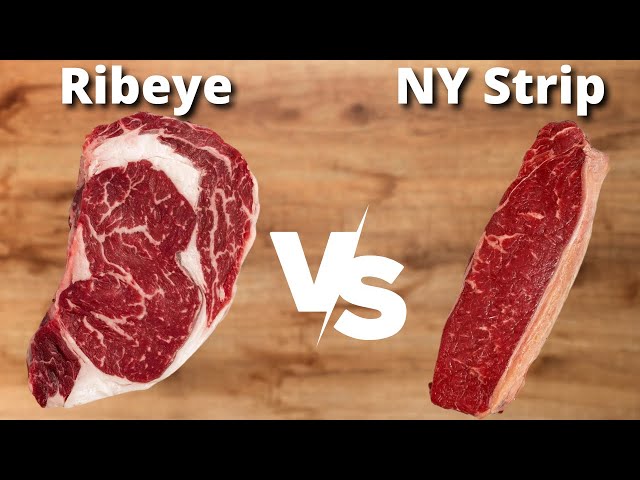
Image source: YouTube
What Are the Main Differences Between Ribeye and Striploin?
When standing at the butcher counter, the choice between these two premium cuts can be daunting. Both are considered high-end steaks, but they offer vastly different eating experiences. The primary distinction lies in the distribution of fat. The ribeye is characterized by its "eye" of fat and heavy marbling throughout the meat, whereas the striploin is leaner, with most of its fat concentrated in a thick strip along the side.
According to culinary experts at Ryan's Grocery, the ribeye is often the preferred choice for those who enjoy a "melt-in-your-mouth" sensation, while the striploin is favored by those who want a robust, beefy flavor without the oily mouthfeel of heavy marbling. The price point for these steaks is usually similar, though ribeyes can occasionally command a premium due to the high demand for the *spinalis dorsi*, or ribeye cap.
| Feature | Ribeye Steak | Striploin (NY Strip) |
|---|---|---|
| Primary Flavor | Buttery, Rich, Intense | Beefy, Meaty, Bold |
| Fat Content | High (Intramuscular) | Moderate (Side Fat Cap) |
| Tenderness | Very High | High (with a firm "chew") |
| Common Names | Delmonico, Beauty Steak | New York Strip, Kansas City Strip |
| Best Cooking Method | Reverse Sear | High-Heat Pan Sear |
Where Do These Steaks Come From on the Cow?
Understanding the anatomy of the animal is the most effective way to appreciate why these steaks taste so different. Both cuts come from the upper back of the cow, a region that does relatively little work compared to the legs or shoulders. This lack of strenuous activity is what makes these muscles so tender.
The Rib Primal (Ribs 6-12)
The ribeye is harvested from the rib primal, specifically between the 6th and 12th ribs. This area is naturally predisposed to storing fat. Because the muscles in this section are used primarily for posture rather than movement, the fibers remain soft. The ribeye actually consists of several different muscles, the most famous being the *longissimus dorsi* (the eye) and the *spinalis dorsi* (the cap). As noted by A Table Full of Joy, the ribeye's location near the front of the animal contributes to its higher fat content.
The Short Loin (Longissimus Dorsi)
Moving further back toward the hindquarters, we find the short loin, which is where the striploin originates. The striploin is essentially the continuation of the *longissimus dorsi* muscle found in the ribeye, but as it moves toward the rear, it becomes leaner and more uniform. This section is also where the tenderloin is located. In fact, if you leave the bone in and keep the tenderloin attached, you get a T-Bone or Porterhouse steak. The striploin is simply the larger side of that bone-in cut.
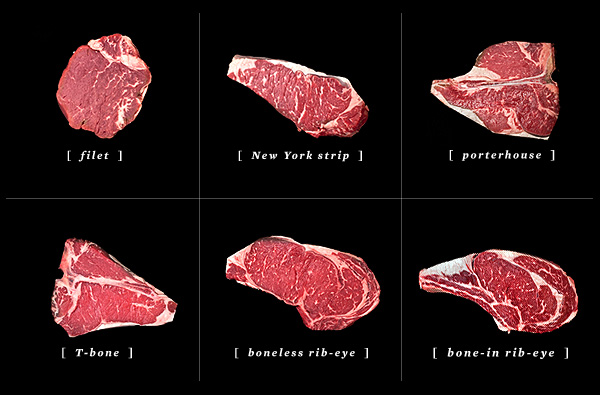
Image source: D Magazine
Comparing Flavor Profiles: Buttery Richness vs. Meaty Beefiness
The debate over which steak tastes better usually comes down to how you define "flavor." Flavor in beef is derived from two main sources: the fat (lipids) and the muscle fibers (proteins). Because these two cuts have different ratios of fat to protein, they appeal to different palates.
The ribeye is the champion of fat-driven flavor. When the intramuscular marbling melts during cooking, it bastes the meat from the inside out, creating a buttery, silky texture. Many enthusiasts consider the ribeye cap (*spinalis*) to be the most prized part of the entire cow because it combines the tenderness of a filet with the intense flavor of a ribeye. If you enjoy a steak that feels decadent and rich, the ribeye stands out as a top choice.
The striploin, on the other hand, offers a protein-driven flavor. Because it has less internal fat, the taste of the actual beef protein is more prominent. It provides a "cleaner" beef flavor that isn't masked by heavy oils. The striploin also features a thick fat cap along one edge. When rendered properly, this fat cap provides a concentrated burst of flavor and a crispy texture that many steak purists prefer over the dispersed marbling of a ribeye.
Which Steak Is More Tender and Has the Best Texture?
Tenderness is often the deciding factor for many diners. In the general hierarchy of steak tenderness, the Tenderloin (Filet Mignon) ranks at the top, followed closely by the Ribeye, with the Striploin taking the third spot among premium cuts. However, "tenderness" doesn't always mean "better."
The ribeye is undeniably softer. The high fat content acts as a lubricant between the muscle fibers, making it very easy to chew. However, some people find the texture of a ribeye to be almost *too* soft or greasy, especially in the larger fat deposits. The striploin offers what is often described as a "great steak bite." It has a firm, tight grain that provides a satisfying resistance when you bite into it, without being tough or gristly. This is why the New York Strip is a staple in high-end steakhouses—it offers a consistent, reliable texture that feels substantial.
One potential pitfall with the striploin is the "vein." Striploins cut from the end closest to the sirloin (the hip) often contain a crescent-shaped piece of connective tissue. This "vein" can be quite tough. To avoid this, always look for "center-cut" striploins, which are free from this nerve and offer a much more uniform eating experience.
How to Identify a Ribeye vs. Striploin at the Butcher Counter
If you are buying meat that isn't clearly labeled, you can use a few visual cues to tell them apart. These "insider" rules help you ensure you're getting the exact cut you want for your recipe.
The "Footprint" Rule for Striploins
The striploin has a very distinct shape. It is typically long and oblong, resembling a large footprint. One end is usually wider and more rounded, while the other tapers slightly. The most obvious identifier is the thick, white strip of fat running along one of the long edges. The grain of the meat is very fine and runs in a single direction, giving it a smooth, uniform appearance.
The "Eye and Cap" Anatomy for Ribeyes
A ribeye is much more complex visually. You should be able to see at least two distinct sections of meat separated by a "kernel" or "eye" of fat. The large center piece is the eye, and the curved muscle wrapping around the top is the cap (*spinalis*). The ribeye is generally more circular or oval than the striploin and will have visible flecks of white fat (marbling) scattered throughout the red muscle. According to Allen Brothers, the presence of this complex muscle structure is the hallmark of a true ribeye.
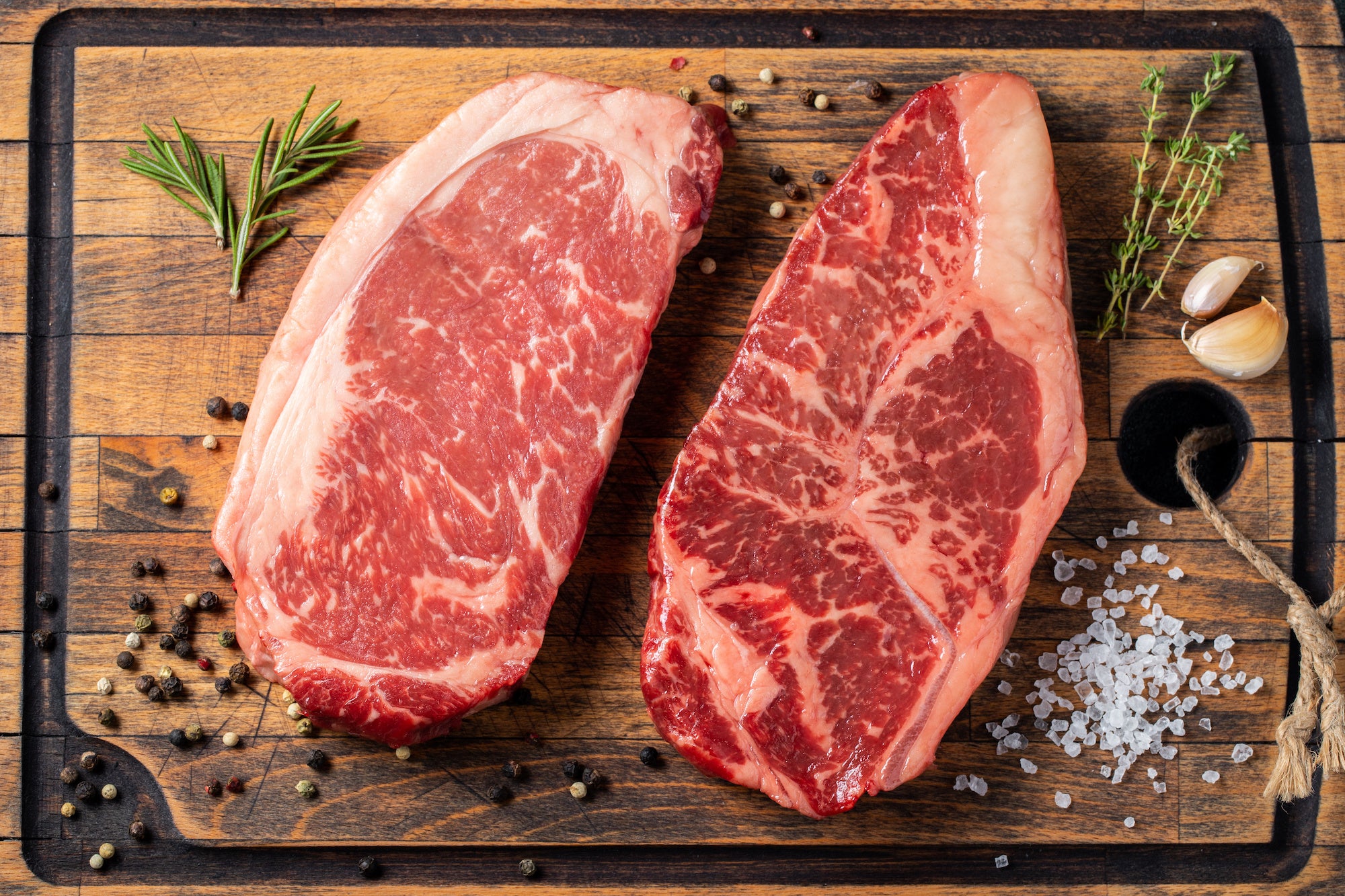
Image source: American Made Grills
Why Does My Striploin Look Grey After Sous Vide Cooking?
A common frustration among home cooks using the sous vide method is that striploins often appear "overcooked" or grey in the center, even when cooked to a perfect medium-rare temperature (like 130°F). Meanwhile, a ribeye cooked at the same temperature remains beautifully pink. This is known in the cooking community as the "Sous Vide Pinkness Mystery."
The explanation lies in thermal conductivity and insulation. Fat is a poor conductor of heat, meaning it acts as an insulator. The heavy marbling in a ribeye protects the internal proteins from rapid temperature changes during the post-sous-vide sear. Because the striploin is leaner, it lacks this internal insulation. When you place a sous-vide striploin in a hot pan to develop a crust, the heat penetrates the center much faster than it would in a ribeye. This can quickly raise the internal temperature by 5-10 degrees, turning your medium-rare pink into a medium-well grey.
- The Cold Shock: After removing the steak from the sous vide bag, pat it dry and place it in the refrigerator for 10 minutes before searing. This cools the surface and prevents the sear from overcooking the center.
- The High-Heat Flash: Use the hottest pan possible (cast iron is a top choice) and sear for no more than 45-60 seconds per side.
- The Mayo Sear: Applying a thin layer of mayonnaise to the striploin before searing helps create a crust almost instantly, reducing the time the steak needs to spend in the pan.
The Chuck Eye Steak and Other Budget-Friendly Alternatives
If you love the flavor of a ribeye but find the price tag a bit high, there is a "secret" cut known as the "Poor Man’s Ribeye"—the Chuck Eye steak. This cut comes from the 5th rib of the cow, which is directly adjacent to the 6th rib where the ribeye primal begins.
Because it is so close to the ribeye, the chuck eye contains a significant portion of the same tender muscles, including the *spinalis*. However, because it is technically part of the "chuck" (shoulder) primal, it is often sold for 30% to 50% less than a standard ribeye. While it may have a bit more connective tissue and require more careful trimming, the flavor profile is remarkably similar to a premium ribeye. As noted by Tasty Food Affair, the chuck eye is a favorite among butchers who want high-end flavor on a budget.
Another alternative is the Top Sirloin. While leaner and tougher than a striploin, a high-quality "Prime" grade top sirloin can offer a similar beefy flavor profile at a fraction of the cost. It is an excellent choice for stir-fries or steak salads where the meat is sliced thinly across the grain.
Best Cooking Methods for Ribeye and Striploin Steaks
Because these steaks have different fat structures, they require slightly different approaches in the kitchen to achieve the best results.
The Ribeye Strategy
For a thick-cut ribeye, the Reverse Sear is widely considered the most effective method. By slowly bringing the steak up to temperature in a low oven (225°F) before searing it in a hot pan, you allow the heavy intramuscular fat to render and soften without overcooking the meat. This results in a steak that is tender from edge to edge.
- Season heavily with salt 24 hours in advance.
- Cook in oven until internal temp reaches 115°F.
- Finish in a screaming hot cast iron skillet with butter and rosemary.
The Striploin Strategy
Striploins excel with a High-Heat Pan Sear. Because they are leaner, they don't need the long rendering time of a ribeye. The key is to focus on the fat cap. Start by holding the steak vertically with tongs, pressing the fat cap against the hot pan for 2 minutes to render it down and make it crispy. Then, sear the flat sides as usual.
- Render the side fat cap first.
- Sear for 3-4 minutes per side for medium-rare.
- Allow to rest for at least 10 minutes to redistribute juices.
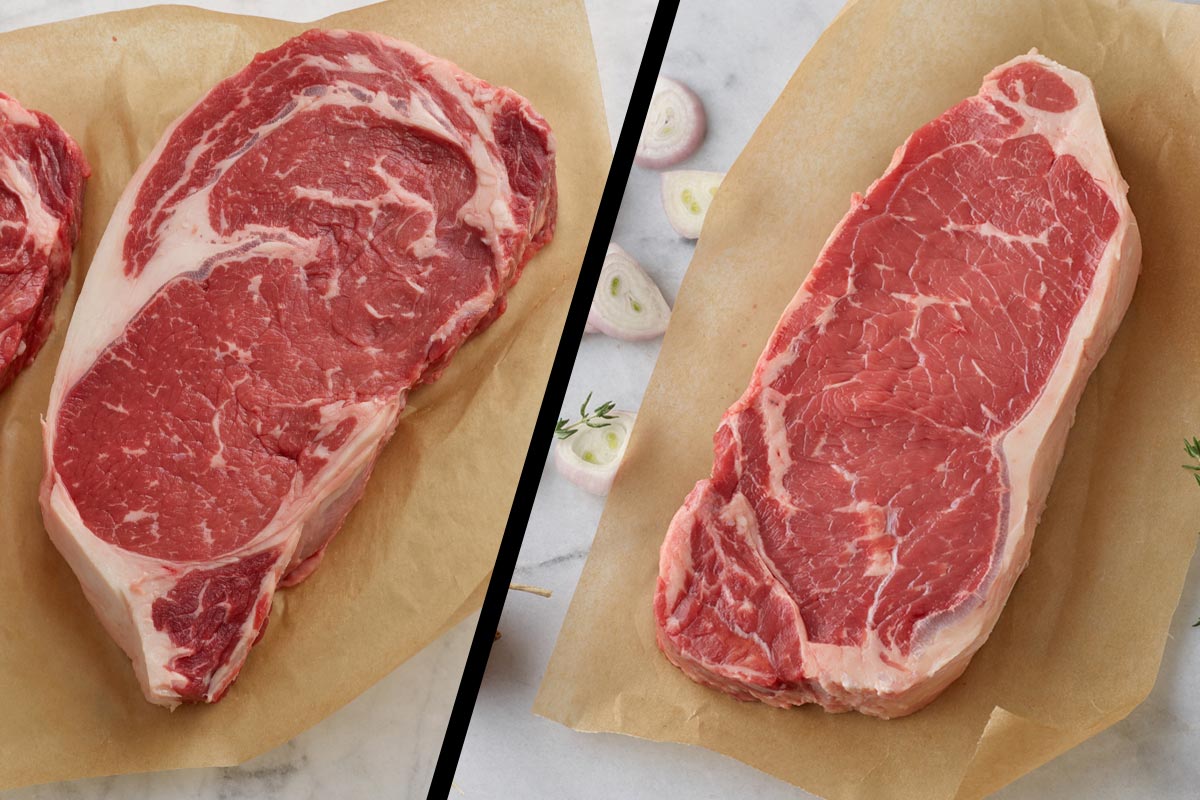
Image source: 1855 Black Angus Beef
Which Steak Offers the Best Value for Your Money?
When evaluating value, you have to look beyond the price per pound. You must consider the "yield"—how much of what you're paying for is actually edible meat. This is where the bone-in vs. boneless debate comes into play.
Ribeyes are frequently sold bone-in (often called Cowboy Steaks or Tomahawks). While the bone looks impressive and can help insulate the meat during cooking, you are paying steak prices for the weight of the bone. If you are on a budget, a boneless ribeye usually offers a better price-to-meat ratio. However, many enthusiasts argue that the meat closest to the bone is the most flavorful part of the steak.
Striploins are more commonly sold boneless. This is because the bone attached to a striploin is the T-shaped lumbar vertebra. When butchers leave this bone in, they usually prefer to sell the cut as a T-Bone or Porterhouse to maximize profit. Therefore, a boneless New York Strip is often the most "honest" value, as you are paying almost exclusively for usable protein and a small amount of trim-able fat.
Frequently Asked Questions
Key Takeaways: Ribeye vs. Striploin
Choosing the right steak is a matter of matching the cut to your personal taste and the occasion. Here is the distilled summary of what you need to know:
- Fat Content: Ribeye is high in intramuscular marbling; Striploin is leaner with a side fat cap.
- Flavor Profile: Choose Ribeye for buttery richness; choose Striploin for a bold, meaty beef flavor.
- Texture: Ribeye is softer and more tender; Striploin has a firmer, more satisfying "steak bite."
- The Spinalis: The Ribeye Cap is widely regarded as one of the most prized muscles on the cow.
- Visual ID: Look for the "footprint" shape for Striploins and the "eye/cap" structure for Ribeyes.
- Cooking: Use the reverse sear for thick Ribeyes and a high-heat pan sear for Striploins.
- Budget Tip: The Chuck Eye steak offers a ribeye-like experience for a significantly lower price.
For your next dinner, try purchasing one of each cut and performing a side-by-side taste test to discover which profile truly satisfies your palate.