How to Find the Best Fabes con Almejas Near You and Spot an Authentic Asturian Restaurant
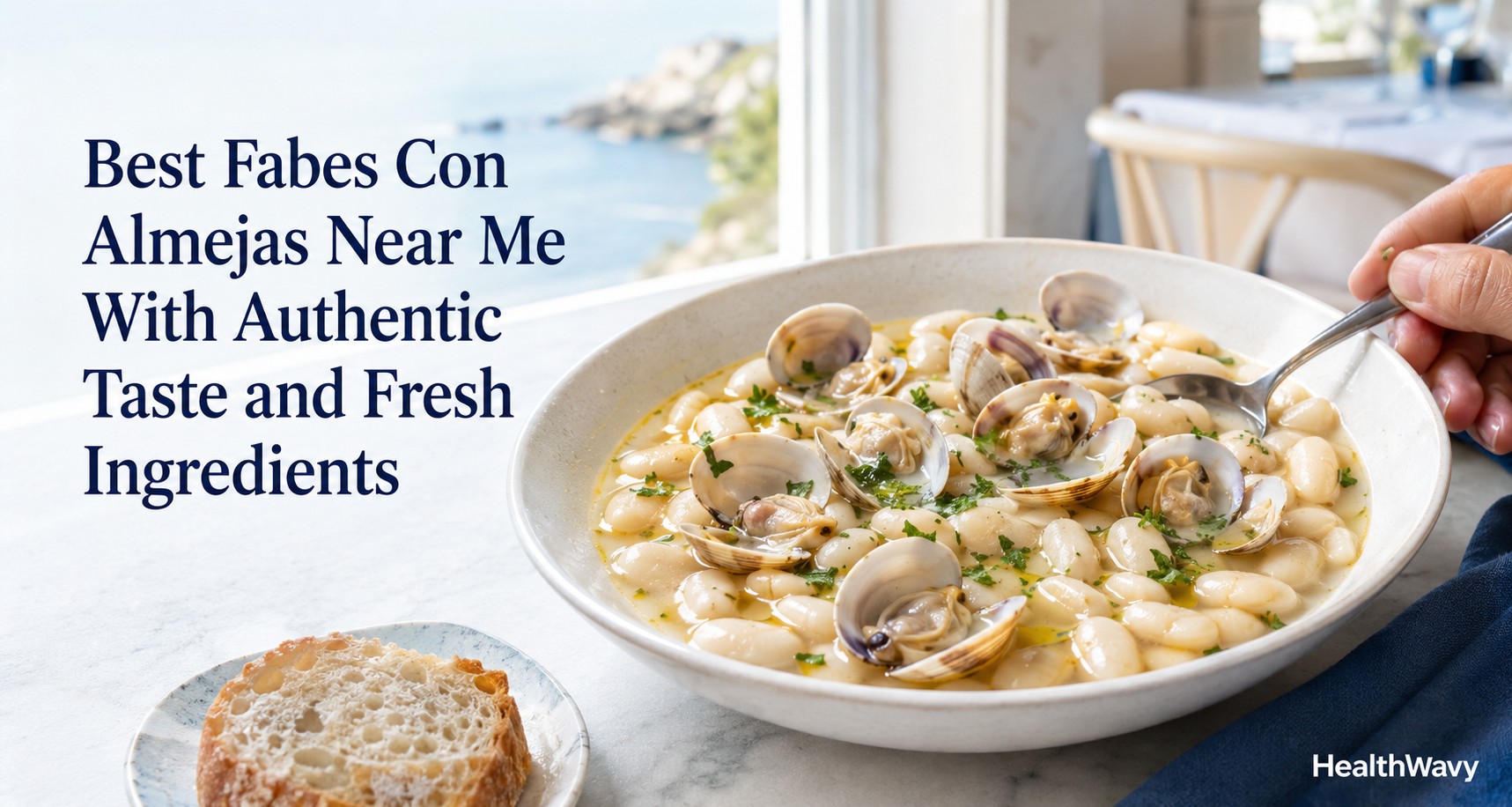
Image source: Health Wavy
When a craving hits for a deeply comforting, elegantly simple seafood stew, few dishes rival the Spanish masterpiece known as fabes con almejas. Often described as a flawless marriage between land and sea, this dish hails from the lush, green, coastal region of Asturias in Northern Spain. However, for diners outside of the Iberian Peninsula, tracking down a premier example of this dish can be an incredibly frustrating experience.
If you type "best fabes con almejas near me" into a standard search engine or restaurant aggregator, the algorithm often fails to understand the nuance of the query. Because the dish is highly regional, search engines typically dilute your results, pointing you toward generic tapas bars, paella restaurants, or even Latin American seafood spots that happen to serve a completely different style of beans and clams. Finding the real deal requires a bit of insider knowledge about Spanish regional cuisine, specific ingredient sourcing, and traditional cooking techniques.
This guide will equip you with the exact strategies needed to locate a restaurant serving an authentic version of this Asturian classic, while also providing the culinary knowledge to evaluate the quality of the dish once it arrives at your table.
What Exactly Is Fabes con Almejas?
To understand why this dish is so highly regarded among culinary enthusiasts, one must first understand its origins. Asturias is a region defined by its rugged coastline along the Cantabrian Sea and its fertile, mountainous interior. This unique geography produces two world-class ingredients: exceptional seafood and extraordinary legumes.
According to culinary historians and experts in Spanish regional cuisine, the dish is a relatively modern invention compared to its heavier, meat-laden cousin, the Fabada Asturiana. While the traditional Fabada relies on chorizo, morcilla (blood sausage), and pork shoulder to provide sustenance during harsh mountain winters, fabes con almejas was developed as a lighter, more refined alternative that could be enjoyed year-round, particularly along the coast. As noted in Núria's exploration of Spanish recipes, it represents a delicate balance where the briny liquor of the clams perfectly seasons the creamy interior of the beans.
To navigate a Spanish menu effectively, it helps to understand the terminology associated with this regional specialty:
- Fabes de la Granja
- The "Gold Standard" bean. A large, flat, white kidney-shaped bean grown specifically in Asturias. It holds a Protected Geographical Indication (PGI) status. When cooked properly, the skin becomes imperceptible, and the interior turns to a buttery cream.
- Almejas de Carril
- Premium grooved carpet shell clams, typically sourced from Galicia (the region immediately west of Asturias). They are prized for their meaty texture and clean, oceanic flavor.
- Fumet
- A highly concentrated seafood stock made from fish bones, shrimp shells, and aromatics. Elite restaurants use this instead of water to simmer the beans, layering the seafood flavor deeply into the legume.
- Salsa Verde
- In the context of Northern Spain, this is not a tomatillo sauce (as in Mexican cuisine), but rather an emulsion of olive oil, garlic, white wine, clam juice, and finely chopped parsley.
Understanding the distinction between regional and national Spanish identity is crucial for food discovery. As highlighted in academic research on national cuisine since 1900, dishes that Americans view broadly as "Spanish" are often fiercely protected regional specialties. Expecting a generic tapas bar to serve authentic Asturian beans is akin to expecting a generic diner to serve authentic Louisiana gumbo.
| Feature | Authentic Asturian Version | Generic "Spanish" Version |
|---|---|---|
| Bean Type | Fabes de la Granja (Large, creamy, thin-skinned) | Cannellini, Navy, or Great Northern Beans (Small, mealy) |
| Broth Base | Clam liquor, olive oil, saffron, parsley | Heavy tomato puree or generic vegetable stock |
| Cooking Method | Shaken gently in the casserole (vuelcos) | Stirred with a spoon (resulting in broken beans) |
| Clam Variety | Galician Clams or high-quality Littlenecks | Frozen clam meat or standard Manila clams |
How to Find Authentic Fabes con Almejas Near You
Because major review platforms lack a specific filter for this dish, you must adjust your search strategy. Searching for "Spanish restaurants" will yield places focused on paella, patatas bravas, and jamón ibérico. While these establishments are wonderful, they often lack the specific supply chain required to import authentic Asturian beans.
Instead, use these targeted search strategies to uncover hidden gems in your area:
- Search for "Sidrería" or "Cider House": In Asturias, traditional restaurants are often cider houses. If a Spanish restaurant in your city advertises natural cider pouring, they are highly likely to serve authentic Northern Spanish cuisine.
- Look for the "Fabada Indicator": Check the online menus of local high-end Spanish restaurants. If they serve a traditional Fabada Asturiana, they already have a supplier for the correct beans. Even if the clam version isn't on the menu, they may offer it as a special.
- Search Reviews for "Plato del Día": Many authentic Spanish spots operate on a "Dish of the Day" model for their heavy stews. Fabes con almejas is frequently featured on Fridays or weekends.
It is also worth noting that commercial hospitality groups often group menu items broadly to appeal to a wider audience. As seen in the approach of groups like Gretalia Hospitality, menus may categorize items simply as "Tapas" or "Especialidades." Do not hesitate to call a highly-rated Spanish restaurant and ask the chef directly if they ever prepare beans with clams. Chefs who take pride in regional cooking are usually thrilled to accommodate a diner who knows exactly what to ask for.
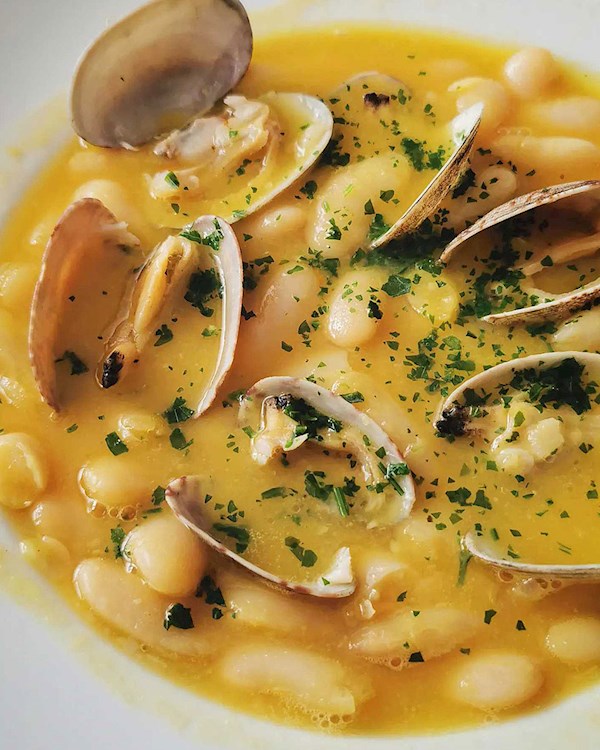
Image source: TasteAtlas
The 3 Signs of a Perfectly Prepared Plate
Once you have located a promising restaurant and ordered the dish, how do you know if the kitchen has executed it properly? Authentic preparation requires immense patience and respect for the ingredients. Look for these three distinct signs of quality.
The Size and Texture of the Beans (The "Gold Standard")
The most immediate visual cue is the bean itself. Authentic Fabes de la Granja are massive—often an inch long when fully hydrated and cooked. If the bowl arrives and the beans look like standard baked beans or small white navy beans, the restaurant has cut corners on sourcing.
Beyond size, texture is paramount. A properly cooked faba should maintain its structural integrity on the spoon but melt instantly upon hitting the palate. The skin should be so delicate that it is virtually undetectable. If the beans are mushy, broken, or have tough, chewy skins, the kitchen has failed the fundamental test of Asturian cooking.
The Color and Consistency of the Broth
The broth is where the magic of emulsification happens. It should not be a watery soup, nor should it be a thick, gloopy gravy. The ideal consistency is a silky, slightly thickened liquid that coats the back of a spoon. This texture is achieved naturally as the starch from the beans mixes with the olive oil and the natural gelatin from the clams.
Color-wise, you are looking for a pale, golden-green hue. The gold comes from high-quality saffron threads (which also impart a subtle floral aroma), while the green comes from fresh parsley added at the very end. A dark red, tomato-heavy sauce is a major red flag, indicating a generic Mediterranean preparation rather than an Asturian one.
The "Shaken, Not Stirred" Rule
If you have a view of the kitchen, or if you are attempting this dish at home, pay attention to how the pot is handled. A cardinal rule of cooking fabes is that a spoon must never enter the pot once the beans begin to soften. Stirring will tear the delicate skins and turn the stew into a puree.
Instead, chefs use a technique called dar vuelcos (giving turns). They grasp the handles of the wide, shallow casserole (often earthenware) and gently shake it in a circular motion. This agitates the beans enough to release their starches into the broth without causing physical damage.
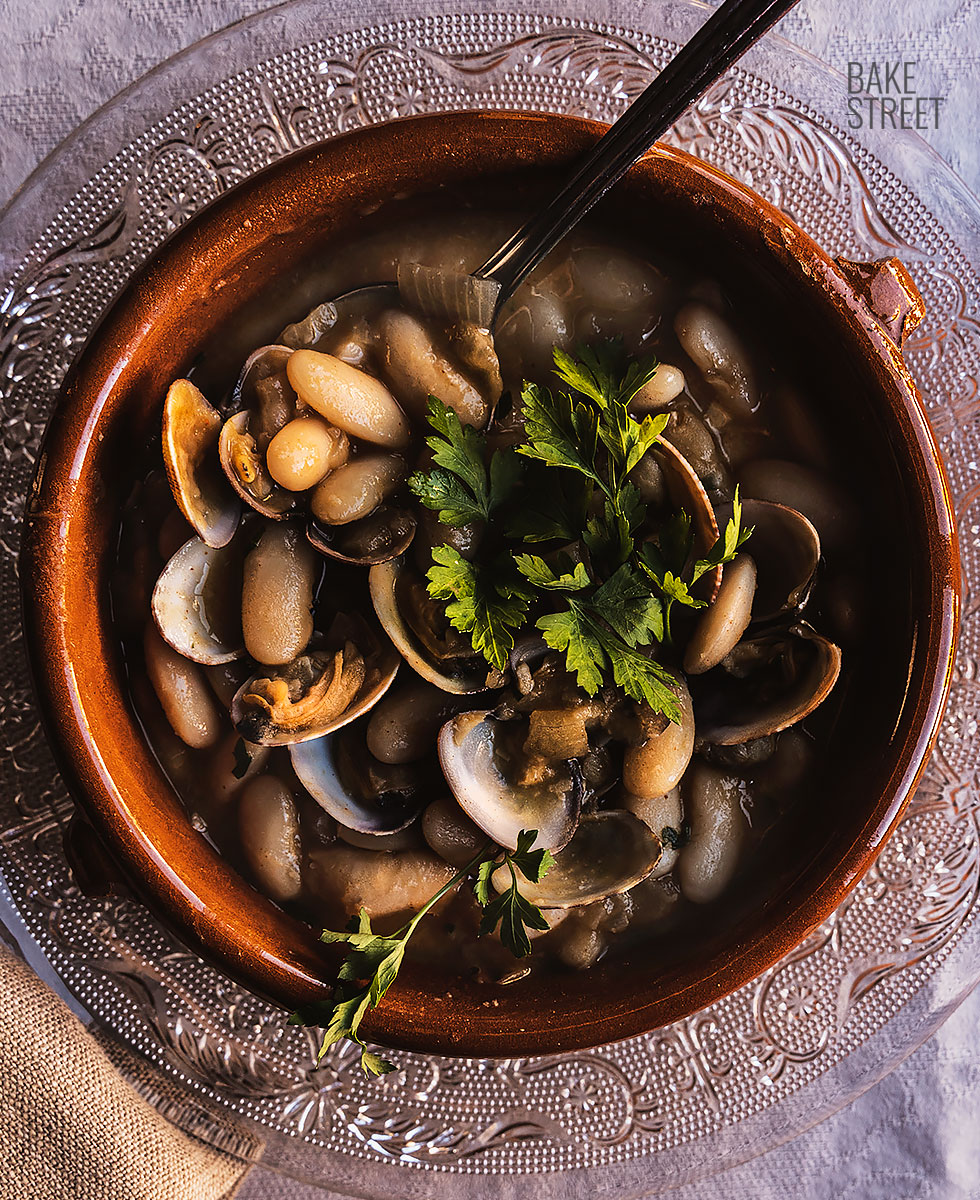
Image source: Bake-Street.com
Why Authenticity Matters: The "Scaring" and "Soaking" Techniques
The high price tag often associated with a quality bowl of fabes con almejas is justified by the labor-intensive process required to prepare it. It is the opposite of fast food; it is a masterclass in patience.
One of the most fascinating traditional techniques employed by authentic kitchens is known as asustar las fabes, which translates directly to "scaring the beans." During the slow, hours-long simmer, the beans will naturally want to expand rapidly as the water boils. If they expand too fast, their skins will burst, ruining the texture.
To prevent the skins from bursting, the chef must "scare" the beans by periodically pouring a splash of cold water into the boiling pot. This sudden drop in temperature halts the boil, allowing the beans to cook gently and evenly from the inside out.
This process is typically repeated three times during the cooking cycle. It requires the chef to monitor the pot constantly, adjusting the heat and adding cold water at precisely the right moments. Furthermore, elite preparations elevate the dish by utilizing a seafood fumet. Instead of simmering the beans in plain water, they are cooked in a rich stock made from fish heads and shrimp shells, ensuring that the essence of the sea permeates the legume long before the actual clams are introduced to the pan.
Common Problems When Eating or Cooking This Dish
Whether you are evaluating a restaurant's performance or attempting to recreate the magic in your own kitchen, two common pitfalls frequently ruin the experience. Understanding these issues helps you appreciate the skill of a chef who avoids them.
Why Are My Beans Still Hard?
A frequent complaint from home cooks—and a sign of a poorly trained restaurant kitchen—is beans that remain hard and chalky in the center, even after hours of simmering. While old beans can be a culprit, the most common enemy is water hardness.
If the local tap water is high in calcium and magnesium (hard water), these minerals bind with the pectin in the bean skins, creating a barrier that prevents water from penetrating the interior. The result is a bean that will never soften, regardless of how long it boils. Top-tier kitchens in areas with hard water will exclusively use bottled mineral water for both the overnight soak and the cooking process to ensure a buttery texture.
How to Deal with Gritty Clams
Nothing ruins a luxurious seafood stew faster than biting into a mouthful of sand. Clams are filter feeders, and they naturally hold grit inside their shells. A restaurant that serves gritty fabes con almejas has failed at basic prep work.
According to detailed culinary methodologies, such as those outlined by Bake-Street's traditional recipe guide, clams must undergo a rigorous purging process. They should be submerged in cold, heavily salted water (mimicking ocean salinity) for at least two hours. Crucially, the clams should be placed in a colander that sits inside the bowl of water. As the clams "spit" out the sand, it falls through the colander to the bottom of the bowl, preventing the clams from re-ingesting it.
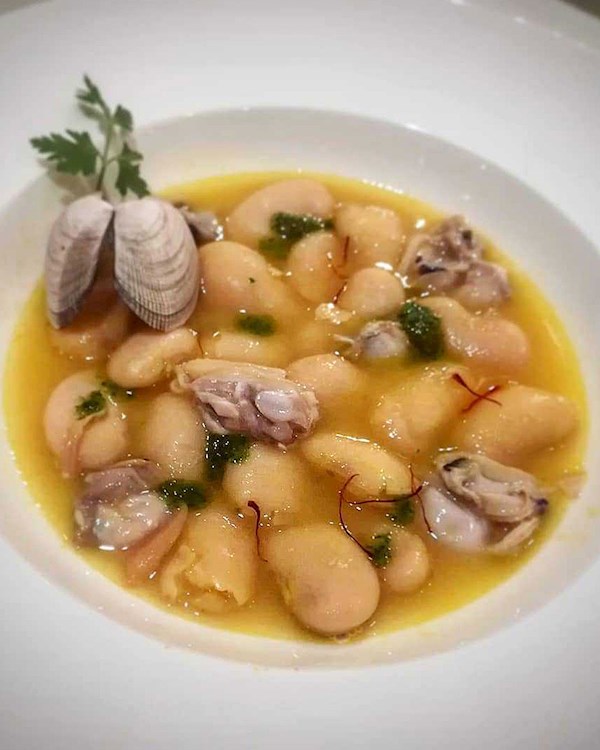
Image source: TasteAtlas
What to Drink with Your Beans and Clams
The beverage pairing is an integral part of the Asturian dining experience. Because this dish is rich, starchy, and savory, it requires a drink with enough acidity to cleanse the palate.
The most traditional and culturally immersive choice is Natural Asturian Cider (Sidra). Asturias is a major culinary hub that, as noted in travel discussions about destinations untouched by mass tourism, fiercely protects its cider culture. This cider is flat, tart, and funky. It must be aerated through a process called escanciar, where the server pours the cider from high above their head into a glass held at waist level. The splash carbonation awakens the flavors of the cider, providing a crisp contrast to the creamy beans.
If cider is unavailable, dry Spanish white wines are an excellent alternative. Look for an Albariño from Rías Baixas or a Godello from Valdeorras. Both of these Galician wines offer bright acidity, subtle salinity, and citrus notes that perfectly complement the briny clams and rich olive oil emulsion.
Frequently Asked Questions
Is Fabes con Almejas gluten-free?
What is the difference between Fabes and regular white beans?
Can I use canned beans to make this dish at home?
How long does it take to cook authentic Fabes con Almejas?
Is this dish served as a starter or a main course?
Final Thoughts: Securing Your Asturian Feast
Finding a top-tier bowl of fabes con almejas outside of Northern Spain requires a bit of culinary detective work, but the reward is a dining experience that ranks among the most comforting and elegant in global cuisine. By knowing what to look for, you can bypass generic tourist traps and find chefs who truly respect the slow-food traditions of Asturias.
- Target your search: Look specifically for "Asturian restaurants" or "Sidrerías" rather than generic Spanish tapas bars.
- Check the beans: Authentic dishes exclusively use massive, buttery Fabes de la Granja, not small navy beans.
- Inspect the broth: The sauce should be a light, emulsified green-gold from parsley and saffron, never a heavy red tomato base.
- Ask about the technique: A kitchen that knows to "scare" the beans with cold water is one that respects the traditional process.
- Pair it properly: Elevate the meal by ordering a bottle of natural Asturian cider or a crisp Galician Albariño.