How Many Countries Are There in the World and Why Does the Number Change?
As of 2026, there are 195 countries recognized by the United Nations. This total includes 193 Member States and 2 Non-Member Observer States: the Holy See (Vatican City) and the State of Palestine. While this is the most widely accepted geopolitical count, other organizations like FIFA (211) and the International Olympic Committee (206) use different criteria, leading to higher totals.
Determining exactly "how much country in world" is a task that sounds simple but quickly reveals layers of geopolitical complexity. Depending on whether you are a diplomat, a professional athlete, or a technical developer, the answer can range from 193 to nearly 250. This discrepancy exists because "country" is not just a physical landmass; it is a status of recognition granted by other nations and international bodies.
The Short Answer: There Are 195 Countries Recognized by the United Nations
The United Nations (UN) is the primary international organization responsible for maintaining peace and security, and its membership list is widely considered the gold standard for sovereign recognition. According to Worldometers, the count remains steady at 195.
This count is divided into two distinct categories:
- 193 Member States: These are fully recognized sovereign nations that have been admitted to the UN General Assembly.
- 2 Non-Member Observer States: The Holy See (Vatican City) and the State of Palestine. These entities have the right to participate in sessions but cannot vote on resolutions.
To become a UN member, a state must be "peace-loving," accept the obligations of the UN Charter, and be recommended by the Security Council before being approved by a two-thirds majority in the General Assembly. This rigorous process ensures that the 193 members are recognized by the vast majority of the global community.
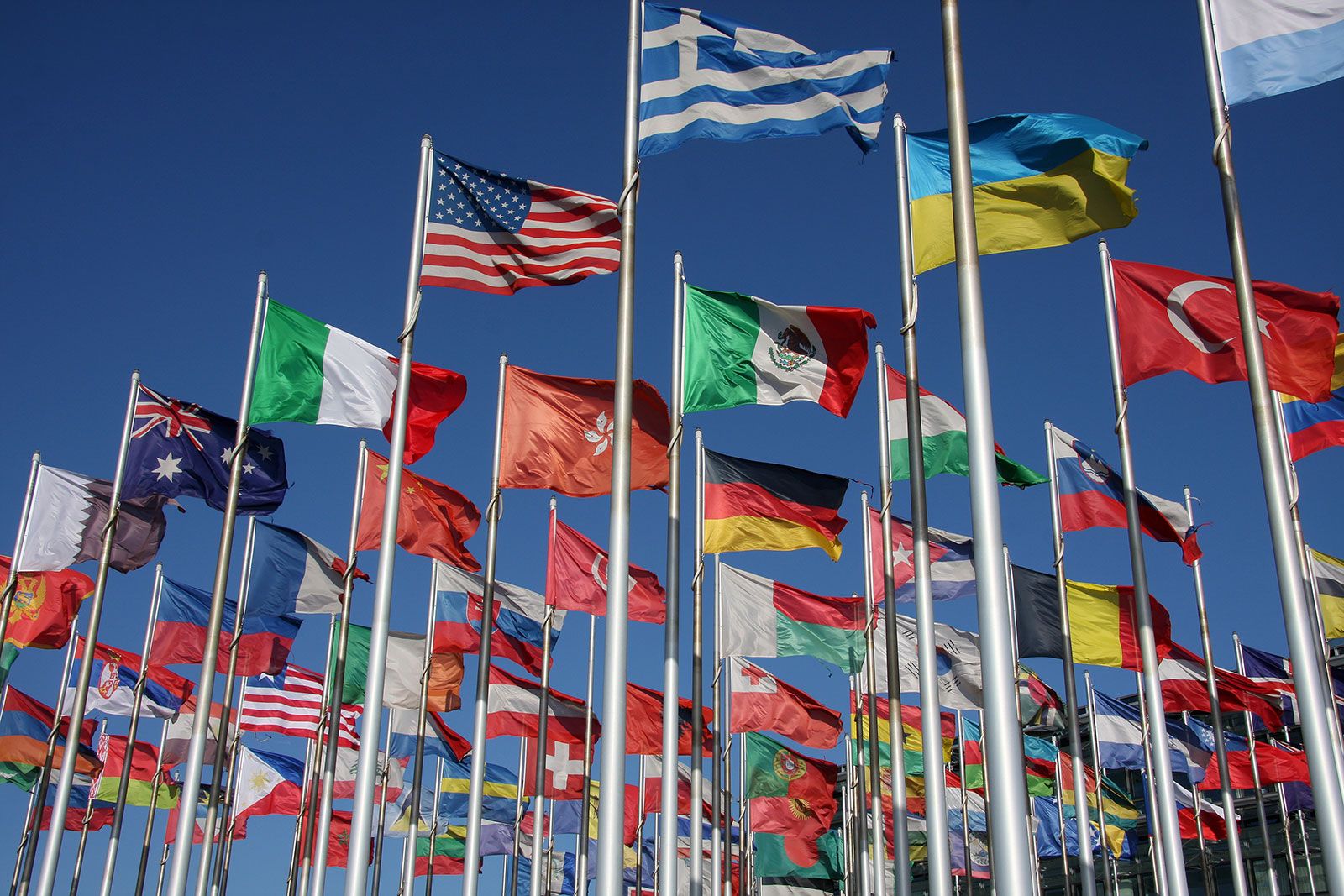
Image source: Britannica
Why Do Different Organizations Have Different Country Counts?
If the UN says 195, why do you see numbers like 206 or 211 during major sporting events? The reason lies in the definition of "nation" versus "sovereign state." Many organizations recognize territories that have distinct cultural identities or administrative autonomy, even if they are technically part of another country.
The Olympic Standard: Why the IOC Recognizes 206 Nations
The International Olympic Committee (IOC) currently recognizes 206 National Olympic Committees. This higher count is a result of historical rules that allowed dependent territories to compete as independent nations. For example, Puerto Rico (a US territory), American Samoa, and Hong Kong (a Special Administrative Region of China) all have their own Olympic teams. While the IOC changed its rules in 1996 to require UN recognition for new members, those already in the system were grandfathered in, maintaining a count that exceeds the UN total.
The FIFA Standard: Why There Are 211 National Teams
FIFA, the governing body for global football, recognizes 211 national associations. This is one of the highest counts in the sporting world. The primary reason for this is the inclusion of the "Home Nations" of the United Kingdom. Instead of competing as one "UK" team, England, Scotland, Wales, and Northern Ireland each have their own FIFA-recognized national team. Additionally, various territories like Gibraltar and the Faroe Islands are granted membership, allowing them to compete on the world stage despite not being independent sovereign states.
The Technical Standard: Understanding the 249 ISO Country Codes
In the digital world, the ISO 3166-1 standard is used to define country codes (like .us for the United States or .jp for Japan). This list currently contains 249 codes. The reason for this high number is purely functional. Digital infrastructure, postal services, and shipping logistics need unique identifiers for every distinct geographic area, including uninhabited islands and dependent territories. For instance, Guam and the French Southern Territories have their own ISO codes to facilitate international trade and communication, even though they are not independent countries.
Comparing the Different Ways to Count the World
To help you decide which count applies to your specific needs, the following table breaks down the primary organizations and their respective totals as of 2026.
| Organization | Count | Primary Purpose | Examples of "Extra" Entities |
|---|---|---|---|
| United Nations | 195 | Geopolitical Sovereignty | Vatican City, State of Palestine |
| IOC (Olympics) | 206 | International Athletics | Puerto Rico, Hong Kong, Guam |
| FIFA (Football) | 211 | Global Soccer Governance | England, Scotland, Faroe Islands |
| CIA World Factbook | 237 | Intelligence & Logistics | Saint Helena, Tokelau, Niue |
| ISO Standard | 249 | Digital & Postal Infrastructure | Bouvet Island, Christmas Island |
| Travelers' Century Club | 330+ | Extreme Travel Completion | Galapagos Islands, Alaska, Sicily |
Which Countries Are Not Recognized by the United Nations?
The map of the world is often a subject of intense diplomatic debate. Several entities function exactly like countries—they have their own governments, passports, and currencies—but lack full recognition from the United Nations due to political sensitivities.
The Unique Status of Taiwan and Kosovo
Taiwan is perhaps the most prominent example of a "de facto" state. It operates as a fully independent democracy with a robust economy, yet it is not a UN member. This is because the People's Republic of China claims Taiwan as part of its territory, and most UN members follow a "One China" policy to maintain diplomatic relations with Beijing. Despite this, Taiwan's passport is widely accepted for international travel, and it participates in the Olympics as "Chinese Taipei."
Kosovo is another complex case. It declared independence from Serbia in 2008 and is recognized by approximately 100 UN member states, including the United States and most of the European Union. However, because permanent Security Council members like Russia and China do not recognize its independence, Kosovo remains outside the official UN membership list.
What Are Non-Self-Governing Territories?
The UN also maintains a list of "Non-Self-Governing Territories." These are places that are not considered part of the governing country's mainland but have not yet achieved full independence or integration. Examples include Western Sahara, Bermuda, and the Cayman Islands. While they often have their own local governments, they are not counted as independent countries in the 195 total because their external affairs and defense are managed by a "parent" state.
The Free Association States of Cook Islands and Niue
The Cook Islands and Niue represent a unique middle ground in international law. Both are in "free association" with New Zealand. This means they are self-governing and have "full treaty-making capacity," allowing them to sign international agreements independently. However, they are not UN members. Some organizations include them in global country lists because they function with almost total autonomy, but for UN purposes, they are categorized differently than the 193 member states.
How Many Countries Are on Each Continent?
If we follow the UN standard of 195 countries, we can break them down by their geographic regions. Africa currently holds the title for the continent with the most sovereign nations.
- Africa: 54 countries (The largest block in the UN).
- Asia: 48 countries (Including transcontinental nations like Turkey and Russia).
- Europe: 44 countries.
- Latin America & Caribbean: 33 countries.
- Oceania: 14 countries (Including Australia and island nations like Fiji).
- Northern America: 2 countries (USA and Canada).
It is important to note that these numbers can vary slightly depending on how you categorize transcontinental countries. For example, while Russia's landmass is mostly in Asia, its political and historical heart is in Europe, leading many to count it as a European nation in geopolitical contexts.
The Most Populous Countries in the World in 2026
The distribution of the world's population is heavily skewed toward a few massive nations. As of mid-2026, the global population continues to shift, with India maintaining its position as the most populous nation on Earth.
| Rank | Country | Estimated Population (2026) |
|---|---|---|
| 1 | India | ~1.476 Billion |
| 2 | China | ~1.412 Billion |
| 3 | United States | ~349 Million |
| 4 | Indonesia | ~283 Million |
| 5 | Pakistan | ~252 Million |
According to data from Worldometers, these five nations alone account for nearly half of the human population. The growth in India and Pakistan contrasts with the stabilizing or slightly declining populations in China and many Western European nations.
Countries That No Longer Exist: A Look at Historical States
The number of countries is not a static figure. Throughout history, nations have merged, dissolved, and changed names. Looking at "ghost countries" helps us understand that today's map is merely a snapshot in time.
Famous Dissolved States and Superseded Nations
The 20th century saw some of the most dramatic changes to the world map. According to the US Office of the Historian, the dissolution of large empires and federations has been a primary driver of the increasing number of countries.
- The Soviet Union (USSR): Dissolved in 1991, splitting into 15 independent countries, including Russia, Ukraine, Kazakhstan, and the Baltic states.
- Yugoslavia: A Balkan federation that dissolved through a series of conflicts in the 1990s, eventually resulting in 7 distinct entities: Serbia, Croatia, Slovenia, Bosnia and Herzegovina, Montenegro, North Macedonia, and Kosovo.
- Czechoslovakia: Known for the "Velvet Divorce" in 1993, this nation peacefully split into two: the Czech Republic (now Czechia) and Slovakia.
- The Republic of Texas: Before joining the United States in 1845, Texas existed as an independent sovereign nation for nine years.
- The Two Sicilies: A large kingdom in Southern Italy that existed before the unification of Italy in the mid-19th century.
Expert Advice for Travelers Who Want to Visit Every Country
For "completionists" who aim to set foot in every nation, the task is less about geography and more about logistics, finance, and diplomacy. Expert travelers like Lee Abbamonte and Henrik Jeppesen have shared insights into what it actually takes to "see the world."
The Challenges of Visa Bureaucracy and Closed Borders
Visiting the 193 UN member states is a massive undertaking. Lee Abbamonte notes that the hardest part isn't the travel itself, but the paperwork. Some countries require extensive documentation, including bank statements, personal interviews at distant embassies, and even medical tests (such as AIDS tests) for long-term visas. Countries like Equatorial Guinea, Turkmenistan, and North Korea are often cited as the most difficult to enter due to strict government controls.
The Difficult Territories to Visit
If your goal is to visit every *territory* (the 330+ list), the difficulty increases exponentially. Henrik Jeppesen, who visited every country at a young age, points out that places like Wake Island (a US military base) or the British Indian Ocean Territory (Diego Garcia) are nearly impossible for civilians to access. Furthermore, reaching remote areas like Antarctica or the South Pole can cost upwards of $45,000 for a single expedition, making the "full list" a pursuit for the truly dedicated.
What Is the Travelers' Century Club?
For those who find the 195 UN list too restrictive, the Travelers' Century Club (TCC) offers a more expansive challenge. They maintain a list of over 330 territories. Their criteria include any area that is geographically, politically, or ethnically removed from the rest of its "parent" country. Under TCC rules, visiting Hawaii counts as a separate "country" from the continental US, and Sicily counts as separate from mainland Italy. This list is a popular choice for travelers who want to explore the true diversity of the globe beyond political borders.
Frequently Asked Questions
The answer depends on the inclusion of the Cook Islands and Niue. While the UN recognizes 195 (193 members + 2 observers), some organizations include the Cook Islands and Niue because they have full treaty-making capacity. However, because they are in free association with New Zealand and are not UN members, 195 remains the standard geopolitical count.
This is due to the historical origins of football. The four "Home Nations" (England, Scotland, Wales, and Northern Ireland) had established their own football associations before FIFA was even formed. To respect this heritage, FIFA allows them to compete individually. In the UN, however, they are represented as a single sovereign state: The United Kingdom of Great Britain and Northern Ireland.
Vatican City (The Holy See) is the smallest country in the world by both area and population. It covers only about 0.44 square kilometers (109 acres) and is an enclave within the city of Rome, Italy. Despite its size, it is a fully recognized sovereign entity and a UN Observer State.
South Sudan is the world's youngest internationally recognized country. It gained independence from Sudan on July 9, 2011, following a decades-long civil war and a historic referendum. It became the 193rd member of the United Nations shortly after its formation.
Yes, it is possible, and several hundred people have officially done so. However, it requires significant financial resources, years of time, and the ability to navigate complex visa requirements. Most "every country" travelers focus on the 193 UN members as their primary goal, as visiting every territory (330+) involves reaching restricted military zones and uninhabited islands.
Final Thoughts on the Ever-Changing Map of the World
Understanding the number of countries in the world requires looking beyond a simple list and recognizing the political and social forces that define a nation. Here are the key takeaways to remember:
- The UN Standard: There are 195 recognized countries (193 members and 2 observers).
- Sporting Differences: FIFA (211) and the IOC (206) recognize more nations due to historical and cultural autonomy.
- Technical Codes: The ISO uses 249 codes to ensure digital and postal systems can reach every corner of the globe.
- Geopolitical Nuance: Entities like Taiwan and Kosovo function as countries but lack full UN recognition.
- Continental Leaders: Africa has the highest number of UN-recognized countries with 54.
- Fluid Borders: The map is not permanent; countries like South Sudan emerge, while others like the USSR dissolve.
- Traveler's Choice: Most global travelers use the UN 193 list as their benchmark for "visiting every country."
Whether you are studying for a geography exam or planning a trip around the globe, remember that the "correct" number of countries depends entirely on whose map you are using.