How English County Cheesemakers Blend Curds of Varying Maturity for Perfect Texture
Traditional English "Territorial" cheeses (such as Cheshire and Lancashire) achieve their signature crumbly texture and complex acidity not just through aging, but through the physical manipulation of the curd. By mixing curds from different vats or consecutive days—combining highly acidic mature curds with sweet, fresh curds—cheesemakers create a natural buffer system. This multi-vat blending technique controls the final pH, prevents a rubbery texture, and establishes the foundation for a long-lasting, friable cheese.
The Secret Behind the English Territorial Crumble
When discussing traditional dairy production in the United Kingdom, the conversation inevitably turns to "Territorial" cheeses. These are the historic, regional varieties named after specific English counties—Cheshire, Lancashire, Gloucester, Wensleydale, and Leicester, among others. While modern consumers often categorize cheese simply by its age (mild, mature, vintage), the true defining characteristic of an authentic English Territorial lies much earlier in the production process: the physical manipulation of the curd before it ever reaches the cheese press.
According to definitions maintained by the American Cheese Society, the categorization of cheese relies heavily on moisture content and the specific techniques used during coagulation and draining. In the case of Northern English styles, the unique texture—often described as a "buttery crumble" or a friable paste—is not an accident of aging. It is the direct result of blending curds of varying maturity.
Unlike continental Alpine cheeses that rely on high-temperature cooking to expel whey, or soft-ripened cheeses that rely on surface molds, traditional English county cheeses rely on mechanical milling and the strategic mixing of acidities. This approach creates a complex flavor profile that develops steadily over months, rather than peaking and spoiling quickly.
Image source: CheeseDelicatessen.com
What Is the Traditional English Blended Curd Method?
In contemporary, large-scale commercial cheesemaking, efficiency is paramount. Milk is pasteurized, inoculated, coagulated, cut, and pressed in a single, continuous "single-vat" batch. The entire process from liquid milk to pressed wheel happens within a few hours. However, the traditional English method is notably different, relying on a multi-vat or multi-day approach.
The technical definition of blending curds involves taking solid cheese curds that have been allowed to develop acidity over time and mixing them with freshly made, sweeter curds. This is often referred to as the "Two-Day" or "Three-Day" curd secret. As detailed in resources from U.S. Dairy, the physical structure of cheese is dictated by how the protein matrix forms and how much calcium is retained. As curds sit, lactic acid bacteria (LAB) consume lactose and produce lactic acid, which drops the pH and changes the physical properties of the protein structure.
If a cheesemaker uses only "old" curd (highly acidic), the resulting cheese will be excessively sharp, brittle, and prone to weeping moisture. If they use only "new" curd (low acidity, high calcium), the cheese will be rubbery, elastic, and mild. By milling these two distinct batches together—literally grinding the curds into small pieces and tossing them with salt—the cheesemaker creates a composite wheel. The mature curds act as a flavor catalyst and acidifier, while the fresh curds provide structural integrity and a buttery mouthfeel.
Why Do Cheesemakers Mix Curds from Different Vats?
The decision to blend curds of varying maturity is not merely a stylistic choice; it is a highly functional technique designed to solve specific dairy science challenges. Cheesemakers employ this method for three primary reasons:
- Consistency Across Seasons: Milk is a seasonal agricultural product. Its fat, protein, and lactose levels fluctuate depending on the cow's diet, the weather, and the lactation cycle. By blending curds from different days, cheesemakers can smooth out these natural variations, ensuring that a wheel of cheese produced in May tastes remarkably similar to one produced in September.
- Texture Development: The blending process physically disrupts the continuous protein matrix. When curds of different acidities are pressed together, they do not fuse into a perfectly seamless block. Instead, they form microscopic fault lines. When you bite into a traditional Cheshire or Lancashire, it breaks along these fault lines, creating the signature "crumble" that melts pleasantly on the palate rather than chewing like rubber.
- Acidity Control and Buffering: Mixing mature curds with fresh curds creates a chemical buffer system. The fresh curds slow down the aggressive acid development of the older curds. This "long-burn" acidity allows the cheese to mature gracefully over 6 to 12 months without becoming overly sour or developing off-flavors.
Image source: DairyCraftPro
The Science of Flocculation and Curd Cutting
Before curds can be blended, they must be perfectly formed. The journey from liquid milk to solid curd requires precise temperature control and timing. In traditional English styles, the initial heating of the milk is typically targeted at 88°F (31°C), a temperature that encourages the optimal activity of mesophilic starter cultures.
Once the rennet (the coagulating enzyme) is added, cheesemakers must determine the exact moment to cut the gel. This is done using the "flocculation method." As demonstrated by professional makers in flocculation testing demonstrations, a sanitized plastic bowl is floated on the surface of the milk and gently spun. When the milk begins to gel (flocculate), the bowl will stop spinning and leave a distinct indentation. The time it takes to reach this point is multiplied by a specific factor (usually 2.5 to 3 for hard cheeses) to determine the exact moment to cut the curd.
When it is time to cut, the size of the curd is critical. Traditional English styles require cutting the gel into tiny cubes. For styles like Cheddar and Cheshire, the curds are cut to approximately 5-mm in size. This "5-mm rule" is essential because smaller curds have a larger surface area relative to their volume, allowing them to expel whey rapidly when heated and stirred. If the curds are cut too large, they retain too much moisture, leading to a soft, short-lived cheese that cannot withstand long-term maturation.
If it takes 15 minutes for the milk to flocculate (the bowl stops spinning), and your recipe calls for a 3x multiplier, you will wait a total of 45 minutes from the time you added the rennet before cutting the curd. This ensures the protein matrix is strong enough to withstand milling and blending.
A Regional Guide to English Territorial Curd Handling
While the broader United Kingdom produces hundreds of cheese varieties, the specific handling of the curd defines the regional identities of English Territorial cheeses. Different counties developed distinct methods based on their local climate, milk types, and historical market demands.
The Milled Curds of Cheshire
Cheshire is widely considered one of the oldest named cheeses in British history. The defining characteristic of Cheshire production is the intense milling of the curd. After the whey is drained, the curds are allowed to acidify until they reach a specific pH. They are then run through a curd mill, breaking them down into small, uniform pieces. These pieces are heavily salted and blended before being packed into molds. This process halts the acid development abruptly and creates a dense, salty, and highly friable texture that is highly regarded by cheese enthusiasts.
The Stacked Curds of Somerset
In contrast to the crumbly Northern cheeses, Somerset is the birthplace of Cheddar. Instead of immediately milling and blending loose curds, the Cheddaring process involves cutting the coagulated mass into large slabs. These slabs are stacked on top of one another and repeatedly turned in the warm vat. The weight of the stacked slabs physically presses the whey out, while the heat encourages the protein fibers to stretch and align. Only after this stacking process are the slabs milled and salted, resulting in a smooth, close texture rather than a crumbly one.
The Three-Day Curd Secret of Lancashire
Lancashire cheese stands out as a top choice for those studying curd blending, as it traditionally utilizes a strict "three-day curd" method. Historically, small dairy farms in Lancashire did not produce enough milk in a single day to fill a large cheese press. To solve this, they would make a small batch of curd on day one and set it aside. They repeated this on day two. On day three, they would combine the highly acidic day-one curd, the moderately acidic day-two curd, and the sweet day-three curd.
This necessity born of small-scale farming resulted in a happy culinary accident. The varying maturities of the curds created a cheese with a remarkable "buttery crumble" and a complex, layered flavor profile that a single-vat process simply cannot replicate. Today, artisanal makers like William Cofield continue to champion these British-style blending techniques to achieve authentic textures.
| County / Region | Cheese Style | Curd Handling Method | Typical Texture |
|---|---|---|---|
| Cheshire | Cheshire | Milled and heavily salted at high acidity | Dense, salty, highly crumbly |
| Lancashire | Lancashire | Three-day blend of varying maturities | Buttery, soft crumble, melting |
| Somerset | Cheddar | Slabbed, stacked, and turned (Cheddaring) | Smooth, firm, close-knit |
| Gloucestershire | Double Gloucester | Lightly milled, colored with annatto | Smooth, slightly flaky, rich |
How Varying Maturity Affects the Final Flavor and Crumble
The maturation process (often referred to as affinage or curing) is where the chemical groundwork laid during the blending phase comes to fruition. According to technical documentation on curd science, the breakdown of proteins (proteolysis) and fats (lipolysis) during aging is driven by the enzymes present in the rennet and the Lactic Acid Bacteria (LAB).
In young blended cheeses (aged 2-3 months), the texture remains semi-hard. The cheese retains a higher moisture content, resulting in a milky, mild flavor profile. The fault lines created by the blended curds are present, but the cheese may still exhibit a slight springiness.
As the cheese enters the mature phase (6-12 months), the environment inside the wheel changes dramatically. The LAB continue to work, breaking down the complex protein chains into smaller peptides and amino acids. This chemical breakdown causes the cheese to lose its elasticity entirely. The blended curd structure becomes highly friable, easily crumbling at the touch of a knife. The flavor deepens, developing sharp, savory, and sometimes slightly crystalline characteristics as calcium lactate forms within the paste.
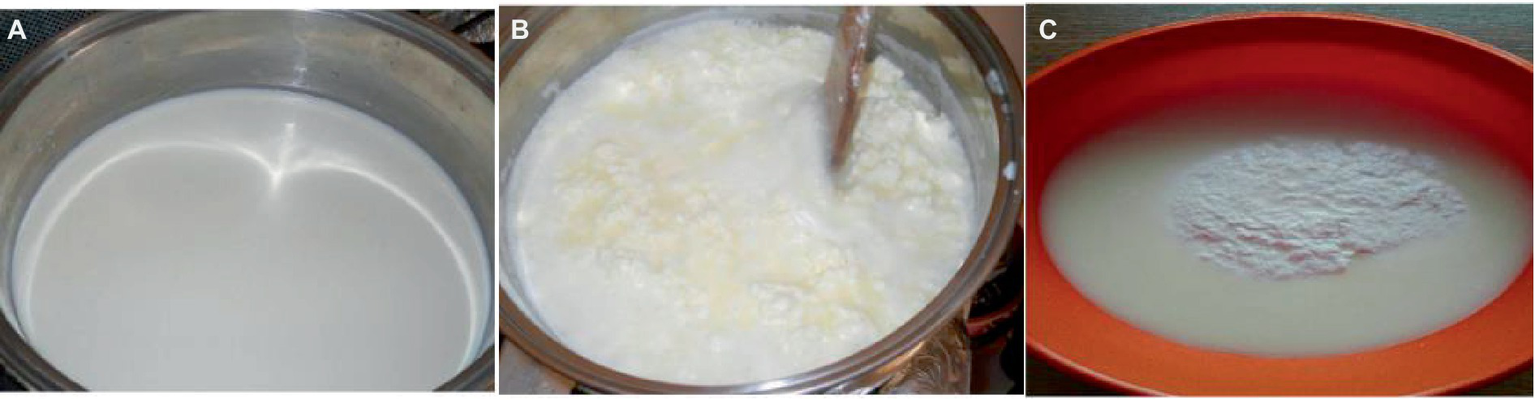
Image source: Frontiers
The History of Cheese as a Military Staple
To understand why English cheesemakers developed these specific methods of milling, blending, and heavy pressing, one must look at the historical economic drivers of the 17th century. Prior to this period, cheese was largely considered a localized "poverty food," consumed quickly before it could spoil.
Cheese was highly seasonal. Because rennet was traditionally sourced from the stomach-bag of suckling calves, cheese was primarily made in the spring when calves were born and milk was abundant. These early cheeses were softer and had shorter shelf lives.
The landscape shifted dramatically during the English Civil War and subsequent conflicts. The English army, particularly during campaigns in Ireland, required massive amounts of durable protein. Cheese became a primary military ration.
As the Royal Navy expanded, the Victualling Board required food that could survive long sea voyages without refrigeration. Continental soft cheeses would rot in the damp holds of ships. English makers responded by refining the blended curd and heavy-pressing methods, creating dense, low-moisture wheels (like Cheshire) that resisted spoilage for months at sea.
This military and naval demand transformed English cheesemaking from a subsistence farming activity into a highly organized, regional industry. The techniques developed to ensure durability—specifically the expulsion of whey through fine curd cutting and the stabilization of pH through curd blending—became the defining characteristics of the Territorial styles we recognize today.
Common Pitfalls When Working with Blended Curds
For modern artisanal makers attempting to replicate traditional English blended curds, several technical challenges frequently arise. Because the process relies on mixing batches with different chemical properties, precision is required to avoid spoilage or textural flaws.
Moisture Traps: When blending curds of varying maturity, the older curds are typically drier than the fresh curds. If the fresh curds retain too much whey, moisture can become trapped in the pockets between the curd pieces during pressing. During the curing phase, this trapped liquid can settle, leading to rot or sour off-flavors. Regular rotation of the cheese wheels on wooden shelves is mandatory to ensure even moisture distribution.
Salt Ratios: Salting is not just for flavor; it stops the acidification process. In small-batch blended curd production, the standard ratio is approximately 2 tablespoons of coarse cheese salt per 2 gallons of milk used. If the salt is not distributed evenly during the milling and blending phase, the cheese will develop uneven acidity, resulting in a mottled texture and inconsistent flavor.
The "Squeak" Problem: Freshly made curds (like those popular at county fairs) are famous for their "squeak" when chewed. This sound is caused by the long, intact protein strands rubbing against the enamel of the teeth. While desirable in a fresh snack, a squeak in a pressed Territorial cheese indicates a failure in the process. It means the curds were not allowed to acidify sufficiently before blending, and the protein matrix did not break down. Proper maturation and blending of older, acidic curds eliminate this elasticity, replacing the squeak with the desired crumble.
Frequently Asked Questions
Final Thoughts on the Art of the English Blend
The distinct character of English Territorial cheeses proves that texture and flavor are dictated by much more than just the passage of time. By mastering the physical manipulation of the curd—specifically the blending of varying maturities—cheesemakers create a complex, durable, and deeply flavorful product that modern single-vat processes struggle to replicate.
- Blend curds of different ages (like the Lancashire 3-day method) to create a natural buffer system that controls the final pH.
- Mill the curds finely to disrupt the protein matrix, ensuring the final cheese develops a friable crumble rather than a rubbery elasticity.
- Cut the initial gel into precise 5-mm cubes to maximize surface area and ensure adequate whey expulsion during the heating phase.
- Rotate the pressed wheels regularly during the curing phase to prevent moisture traps and ensure even maturation.
- Age the blended wheels for 6 to 12 months to allow Lactic Acid Bacteria to break down proteins, eliminating the "squeak" and deepening the savory flavor.